CENTCOM Warns Commercial Location Data Used to Target US Personnel in Theater
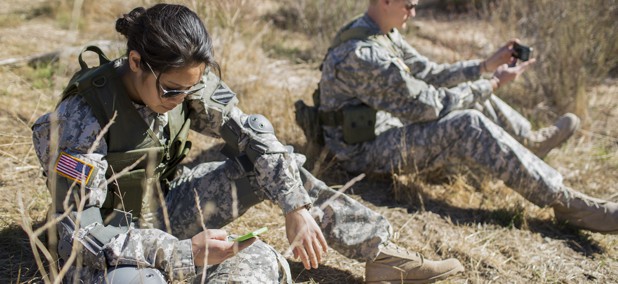
If CENTCOM moves to restrict commercial app use or require VPN/location spoofing on issued devices, the downstream effect hits recruitment and retention — soldiers already chafe under operational security rules; adding a blanket ban on fitness tracking and social media check-ins will accelerate attrition in units where morale is already strained by extended rotations in the Gulf.
More immediately: this opens a wedge for adversaries to weaponize location data as a force-multiplier against US air operations. If Iranian air defenses can geolocate US forward air controllers or maintenance crews via their phones, interdict patterns become predictable, and attrition risk on manned aviation rises.
This exposes a structural vulnerability in force protection that cuts across every US military installation and forward-deployed unit in CENTCOM's area of responsibility — and no procedural patch fixes it without restricting soldier phone use, which no commander will enforce.
The threat is not hypothetical: commercial location brokers aggregate GPS pings from fitness apps, social media check-ins, and device telemetry, then sell access to state and non-state actors. Adversaries already demonstrated this capability in Ukraine (Russian forces used Meta data to target Ukrainian positions) and against US personnel in Iraq (Iranian proxy networks mapped patrol routes via Strava heatmaps).
CENTCOM's warning suggests the problem has crossed a threshold — either a specific incident occurred, or volume of intelligence collection against US personnel spiked enough to force disclosure.
Watch the next CENTCOM commander's testimony to Congress (likely June-July 2026) for whether this escalates into a formal operational security directive, which would constrain social media use across the theater and signal that location-data targeting is now treated as a first-order threat to force protection.
Did CENTCOM's warning follow a specific incident — a successful targeting event, a close call, or a captured adversary document — or is this precautionary disclosure driven by volume of collection?
Fault Lines
Strategic intelligence, synthesized daily — with a public track record. Every call graded against what actually happened.