CSIS-Cited Purge of 100+ PLA Officers Since 2022 Reshapes Military High Command
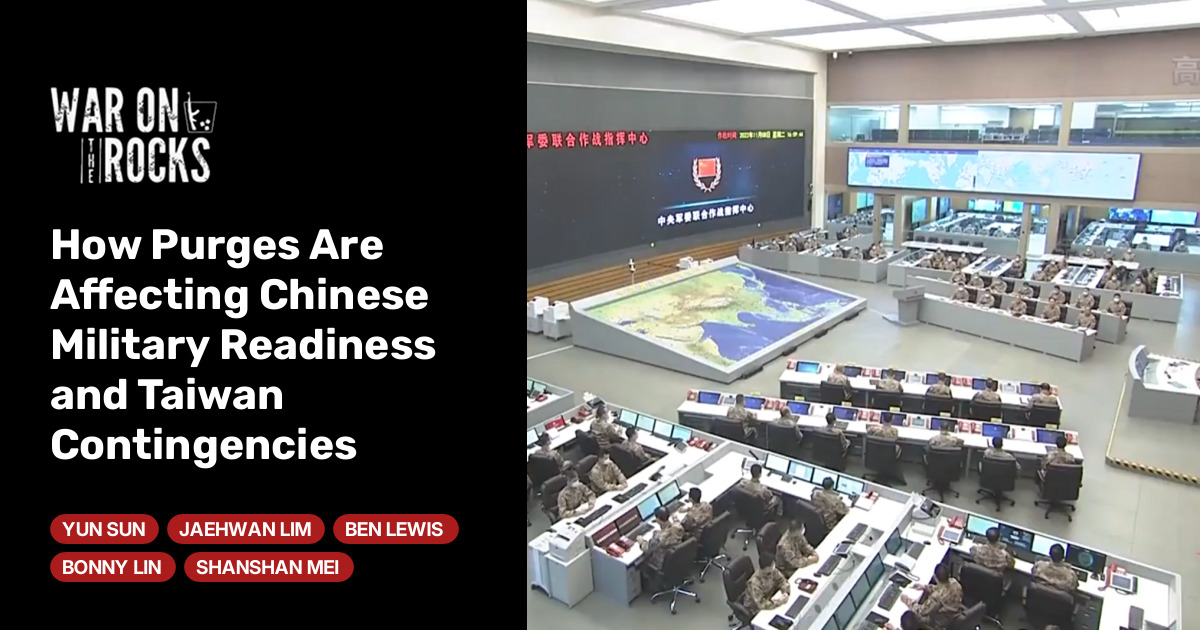
If political allegiance has displaced operational competence as the primary criterion for promotion, then the Eastern Theater Command's readiness for a complex joint amphibious operation — the most demanding military task the PLA would face — is lower than hardware modernization metrics suggest.
INDOPACOM planners who rely on PLA order-of-battle assessments built before the 2024-2026 purge acceleration are working from a stale picture of who actually commands what.
A degraded command-and-control system also raises the risk of miscalculation in a crisis: officers uncertain of their standing may hesitate, over-report, or act without authorization to demonstrate loyalty, each of which shortens the decision window for US and Taiwanese responses.
Five analysts writing in War on the Rocks — including Stimson Center China Program director Yun Sun — assess that the purges have elevated political loyalty over professional competence across the general officers' corps, with social trust and morale described as having 'plummeted.' Rebuilding that corps takes time the PLA may not have if a Taiwan contingency materializes in the near term.
The CMC General Office, which Zhong Shaojun headed, sits at the nerve center of command-and-control; losing its director to a purge is not a personnel footnote but a disruption to the organ that coordinates Xi's direct orders to theater commands.
Does the CSIS February report or the War on the Rocks analysis identify which PLA theater commands — Eastern Theater Command in particular — have experienced the highest officer turnover, and whether any purged officers held operational roles in Taiwan contingency planning?
Fault Lines
Strategic intelligence, synthesized daily — with a public track record. Every call graded against what actually happened.