UK Awards AW149 Contract to Leonardo, Signals Autonomous Systems Investment
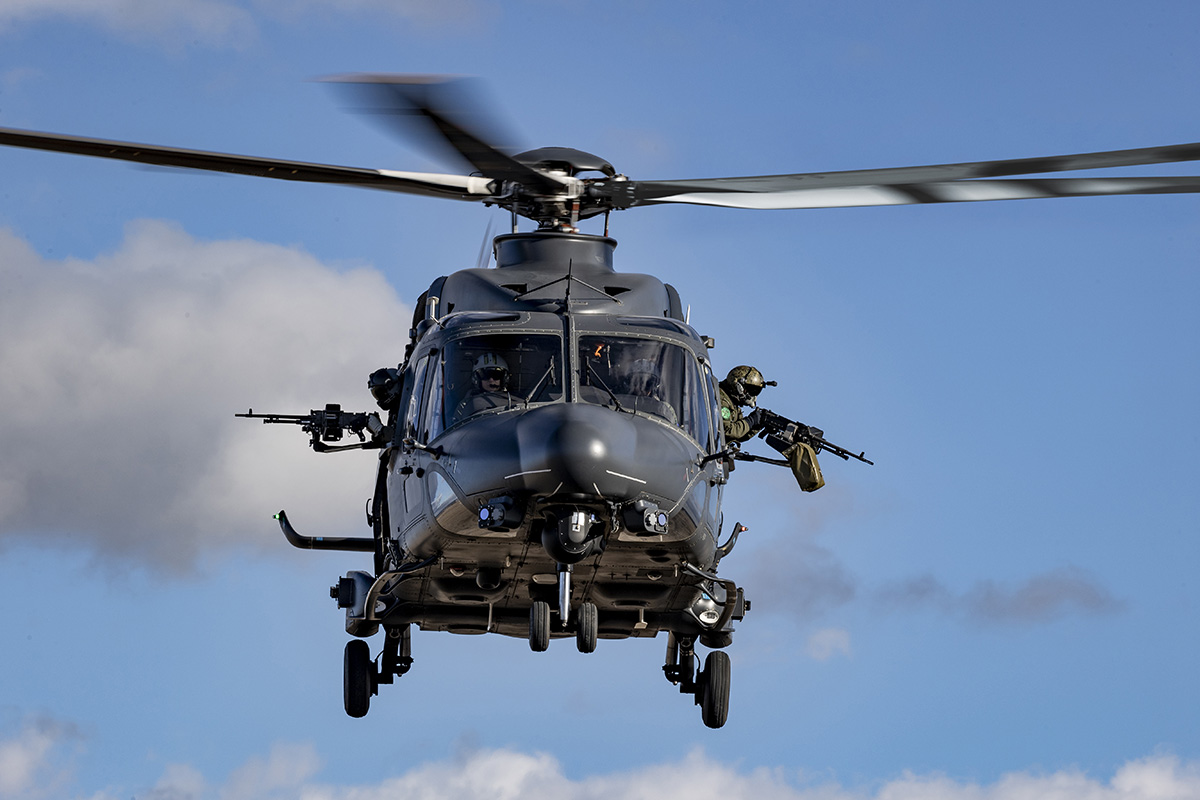
The pairing of a platform award with autonomy investment forces Leonardo to compete on two fronts simultaneously: sustaining a mature airframe while developing next-generation software and control systems. This creates a margin pressure on legacy production that must fund R&D, likely pushing Leonardo to seek cost-sharing partnerships or export variants to offset development risk.
If the UK autonomy mandate becomes a contractual requirement with penalties for delay, Leonardo's supply chain (particularly software vendors and sensor integrators) becomes a constraint on the entire UK rotorcraft modernization timeline.
This confirms Leonardo's AW149 as the UK's medium-lift helicopter for the next 15+ years, locking in sustainment revenue and production slots through the 2030s.
More importantly, the explicit coupling of the NMH award with autonomous systems investment signals UK MoD intent to embed autonomy into rotorcraft operations — a capability gap relative to peer competitors. Leonardo now has contractual obligation and budgetary cover to develop and integrate autonomous mission systems, creating a new revenue stream and technical moat.
The risk: if autonomy integration lags or costs overrun, the entire program becomes a liability for both the company and UK industrial policy.
The article does not specify: (1) contract value or total program cost; (2) number of aircraft or delivery schedule; (3) which autonomous systems are in scope (autonomous flight, mission planning, sensor fusion, swarming); (4) whether autonomy requirements are contractually binding or aspirational;...
Fault Lines
Strategic intelligence, synthesized daily — with a public track record. Every call graded against what actually happened.