Trump Shifts Tariff Authority After Supreme Court Blocks IEEPA Route
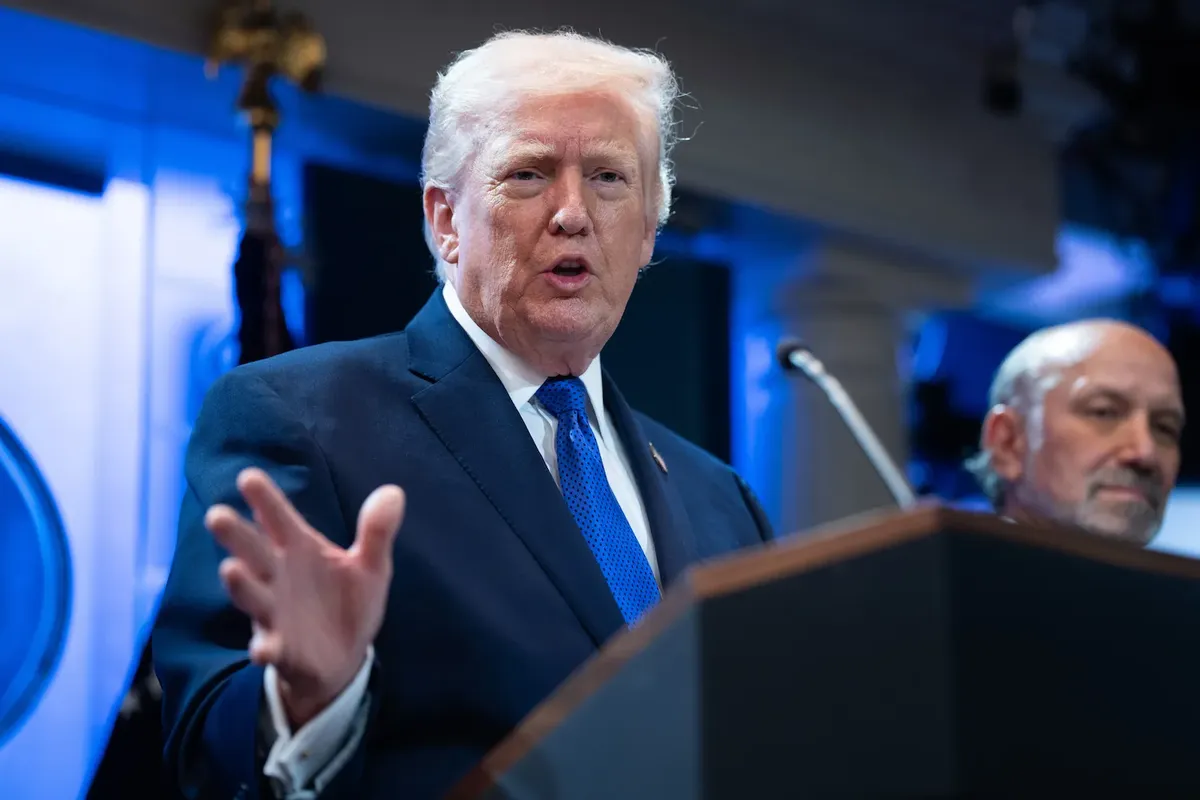
Tariff authority directly constrains cost modeling for FY27 contract proposals. If the new mechanism survives court review and applies broadly, defense primes must absorb or pass through tariff costs on foreign subcomponents—forcing margin renegotiation on fixed-price development contracts (NGAD, SHIELD, hypersonics programs).
If the alternative authority fails and no tariff regime emerges, input costs drop, but contractor guidance issued under tariff assumptions becomes outdated, triggering earnings restatements and re-baselining of program unit costs. Either outcome affects capital allocation: primes shift investment toward domestic sourcing or automation to offset tariff exposure.
The core issue for defense supply chains is not whether tariffs exist, but which industries and products face them and whether the new authority survives legal challenge.
If Trump succeeds under Section 122 or equivalent, tariffs on foreign-sourced components (electronics, rare earths, specialty alloys) will persist and likely increase compliance costs for Lockheed Martin, RTX, and General Dynamics across subcontractor networks. If the alternative authority also fails, a tariff-free window opens—a material shift in input costs for FY27 procurement.
The timeline matters: if litigation extends into late 2026, defense contractors face cash-flow uncertainty during budget negotiations. Watch whether the new authority explicitly exempts defense-critical items or applies uniformly.
The article does not specify which statutory authority Trump intends to use, whether it includes carve-outs for defense-critical materials, or the timeline for implementation and expected legal challenge.
Fault Lines
Strategic intelligence, synthesized daily — with a public track record. Every call graded against what actually happened.