Ukrainian Drone Strike Halts NORSI Refinery's Main Crude Unit; Russia's No. 2 Gasoline Producer Offline
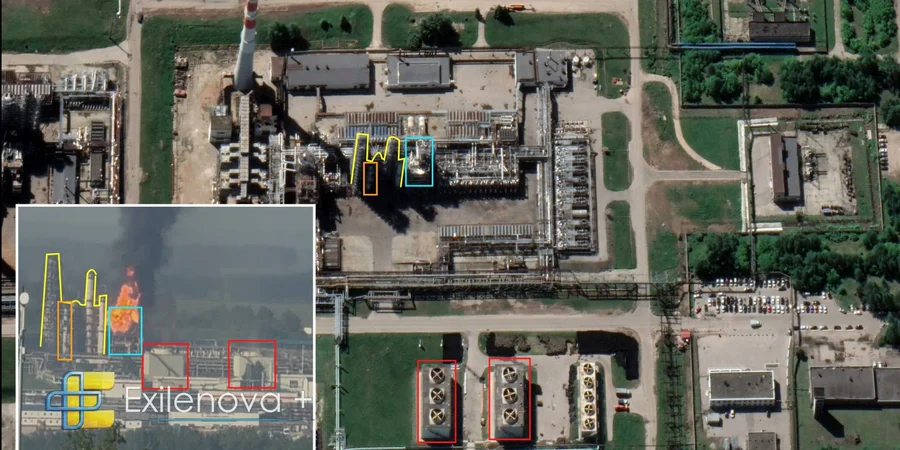
The pattern matters more than the single strike. Three refinery hits in two weeks suggests Ukraine has solved the targeting problem for inland facilities and is now executing a systematic campaign against Russia's downstream sector.
If NORSI's downtime extends beyond 60 days, Lukoil will have to choose between importing crude (at higher transport costs, given sanctions pressure on tanker availability) or accepting lost revenue. This pressure cascades: Lukoil's cash flow weakens, dividend capacity shrinks, and Moscow's ability to fund energy sector capex contracts.
This is the third major Russian refinery strike in 14 days—following Lukoil-Nizhegorodnefteorgsintez (May 20) and Azot (May 20)—and the first confirmed shutdown of a primary crude unit at a Tier-1 facility.
Russia's refining capacity is now losing roughly 350,000 barrels per day of output across recent strikes. Gazprombank and Surgutneftegaz will face margin compression as they absorb NORSI's lost throughput into secondary markets; the crude-to-product spread widens, forcing either price hikes (visible to EU buyers watching Russian fuel imports) or production cuts elsewhere.
Watch for Russian oil ministry guidance in June: if they publicly revise annual gasoline export forecasts downward, it signals structural damage rather than temporary disruption.
What is the actual repair timeline for NORSI's main crude unit—weeks or months? If weeks, this is a supply shock. If months, Russia's refining base faces a structural constraint that will force either import substitution or export losses.
Fault Lines
Strategic intelligence, synthesized daily — with a public track record. Every call graded against what actually happened.