Air Force Live-Fire Tests of Armed CCAs Expected Mid-2026, Accelerating Autonomous Fighter Deployment
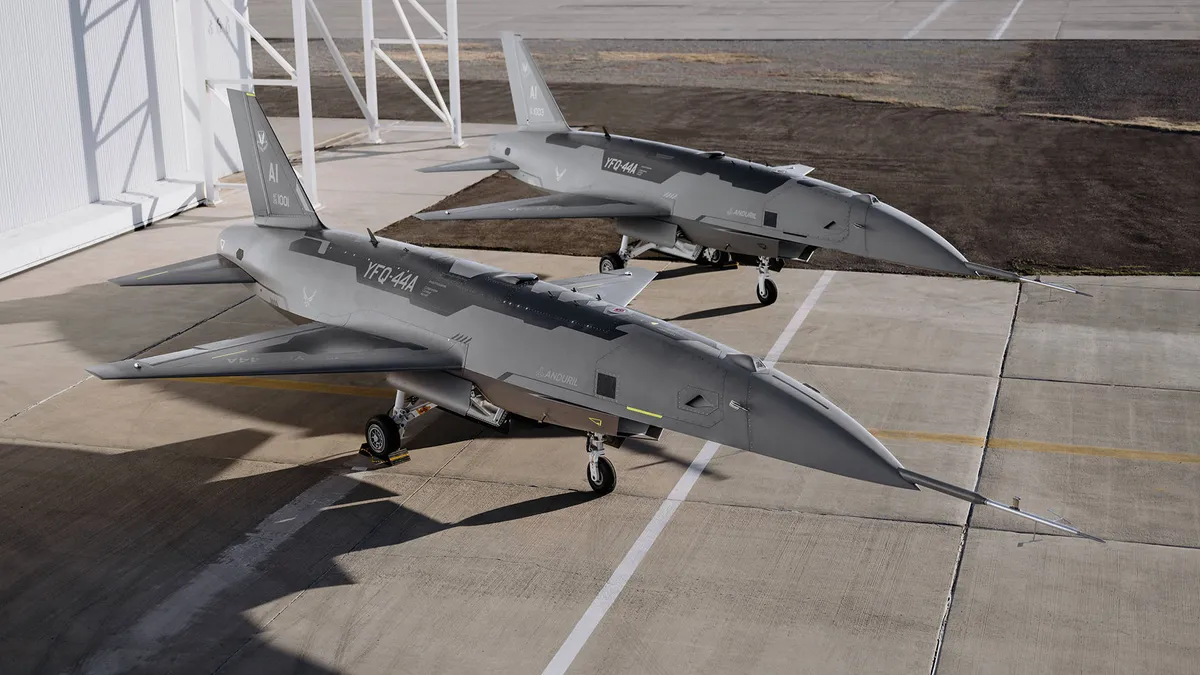
Successful live-fire tests accelerate the transition of CCAs from development to operational inventory, which directly compresses the timeline for distributed force packages in the Indo-Pacific.
If tests proceed on schedule, Air Force squadron assignments could occur by 2027-28, forcing Pacific Air Forces to integrate autonomous wingmen into contested airspace tactics before allied air forces (Japan, South Korea, Australia) have equivalent platforms, creating a temporary U.S. advantage in multi-domain operations but also raising interoperability and command-and-control complexity with allies who lack compatible autonomous systems.
Live weapons integration on autonomous fighters represents a capability gate — once cleared, it removes a major regulatory and technical hurdle to operational deployment.
The timeline compression matters because it signals the Air Force is willing to accept higher testing risk to field CCAs faster than F-35 or similar programs. For Kratos, General Atomics, and other CCA prime contractors, successful live-fire tests unlock production ramp authority and potential FY27-28 operational squadron assignments.
The risk: if live-fire tests reveal integration or autonomy failures, the entire accelerated schedule collapses, delaying autonomous fighter availability by 2-3 years and forcing a reversion to slower, traditional development gates.
The article does not specify which CCA platform(s) are being tested, whether live-fire tests are tethered to specific operational requirements or threat timelines (e.g., Indo-Pacific contingency), or what constitutes success criteria for those tests.
Fault Lines
Strategic intelligence, synthesized daily — with a public track record. Every call graded against what actually happened.