Air Force B-21 Expansion Deal Commits $4.5B in FY26 Reconciliation Funds
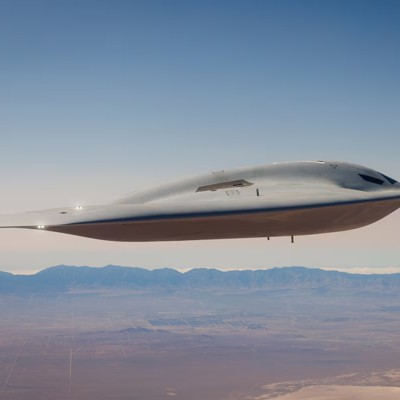
Accelerated B-21 production increases the inventory of air-breathing platforms available for Pacific Command contingencies before 2030, directly affecting force-sizing assumptions in the Taiwan scenario and potentially deferring investments in shorter-range strike systems.
If the $4.5B is additive rather than reallocated, it sets a precedent for using reconciliation authority to bypass normal appropriations caps on single programs — a mechanism that could shift future competition between Air Force modernization priorities toward whichever has strongest congressional backing rather than strategic necessity.
This signals sustained congressional appetite for accelerating strategic bomber capacity despite budget constraints — reconciliation funds typically bypass normal appropriations scrutiny, reducing delay risk.
For Northrop, the deal locks in multi-year volume commitments that stabilize production ramp costs and improve unit economics on a platform with limited competition. The scale ($4.5B in one fiscal year for bomber-related work) suggests the B-21 is now a top-tier modernization priority, competing successfully against other Air Force programs for discretionary capital.
However, the article does not clarify whether this $4.5B is incremental to baseline B-21 funding or a reallocation, which determines whether other programs face compression.
Does the $4.5B represent new money or reallocation from existing Air Force accounts? What production rate (aircraft per year) does 'expanded production' mean, and over what timeline? Are there supply chain or industrial base constraints that limit how fast Northrop can scale?
Fault Lines
Strategic intelligence, synthesized daily — with a public track record. Every call graded against what actually happened.