China-Russia Joint Bomber Patrol Over East China Sea Intercepted by US-Japan Fighters
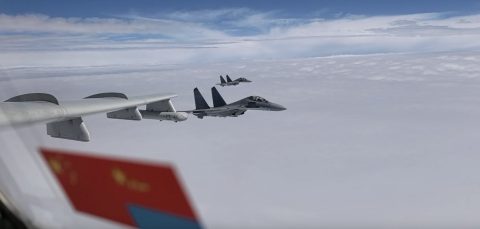
If this becomes routine—say, quarterly or monthly joint patrols—it signals that Moscow and Beijing have moved past rhetorical alignment to operational integration in the Western Pacific. That changes INDOPACOM's force-posture calculus: air defense assets currently allocated to Taiwan contingency would need to be split between two vectors (Russia from the north, China from the west).
Conversely, if this was a one-off demonstration timed to the Iran escalation cycle (the US was already conducting strikes on June 26-28), it's signaling solidarity without structural commitment. Watch the frequency and composition of follow-on sorties—if Russia starts flying bombers with Chinese fighter escort regularly, the burden on Kadena and Misawa air bases rises sharply.
This sortie tests whether US-Japan integrated air defense can respond to coordinated Sino-Russian operations at scale.
The intercept itself is routine, but the *composition* signals a shift: Russia is now willing to fly long-range bombers within striking distance of US-allied airspace in peacetime, and China is providing fighter cover for Russian assets over contested waters.
For INDOPACOM and the Japan Air Self-Defense Force, this means the threat model for Taiwan contingency planning just expanded—they now must plan for simultaneous Russian bomber pressure in the East China Sea while managing a Taiwan Strait crisis. The next inflection is whether this becomes a recurring monthly exercise (suggesting coordination at the strategic level) or a one-off demonstration.
Did Russia and China coordinate this sortie with explicit strategic intent, or was it opportunistic? And critically: did the intercepting US-Japan fighters actually force the formation to turn back, or did it complete its patrol unimpeded?
Fault Lines
Strategic intelligence, synthesized daily — with a public track record. Every call graded against what actually happened.