House Authorizes $500M for Second Flight III Arleigh Burke Destroyer in FY27
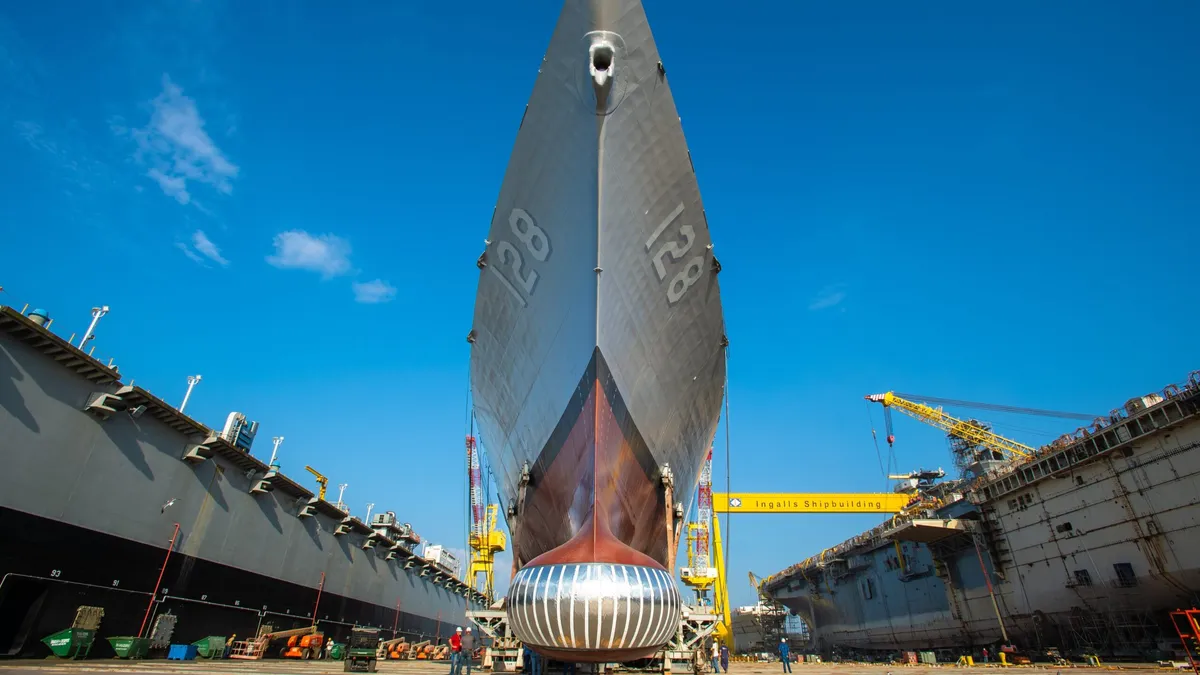
Bath Iron Works operates on a two-ship-per-year cadence that requires continuous material procurement and labor stability. A one-year gap between Lots forces the yard to either maintain excess capacity (expensive) or lay off workers and restart (costly and schedule-risky). The $500M authorization is a floor, not a ceiling—the actual contract will cost $1.8–2.1B depending on learning curve and inflation.
If the Navy doesn't obligate funds in FY27, the authorization expires and the Hill must re-fight the battle in FY28, by which time workforce attrition at Bath may have already degraded production efficiency.
Bath Iron Works faces a production cadence decision that affects workforce stability and shipyard utilization through 2029.
The $500M incremental authorization signals the Hill intends to sustain two-destroyer-per-year production, but only if the Navy executes the contract award in the next fiscal cycle—otherwise the gap between Lot 16 and Lot 17 stretches, forcing workforce furloughs and restart costs.
Watch whether the Navy's FY27 budget justification (due to Congress by early 2026) commits to the second destroyer or defers it, which would signal a procurement pause despite the authorization.
Does the Navy's POM (Program Objective Memorandum) for FY27 actually fund the second destroyer, or is the House authorization aspirational without corresponding DoN budget request?
Fault Lines
Strategic intelligence, synthesized daily — with a public track record. Every call graded against what actually happened.