Leonardo Proteus Autonomous Helicopter Awaits UK MoD Funding Decision
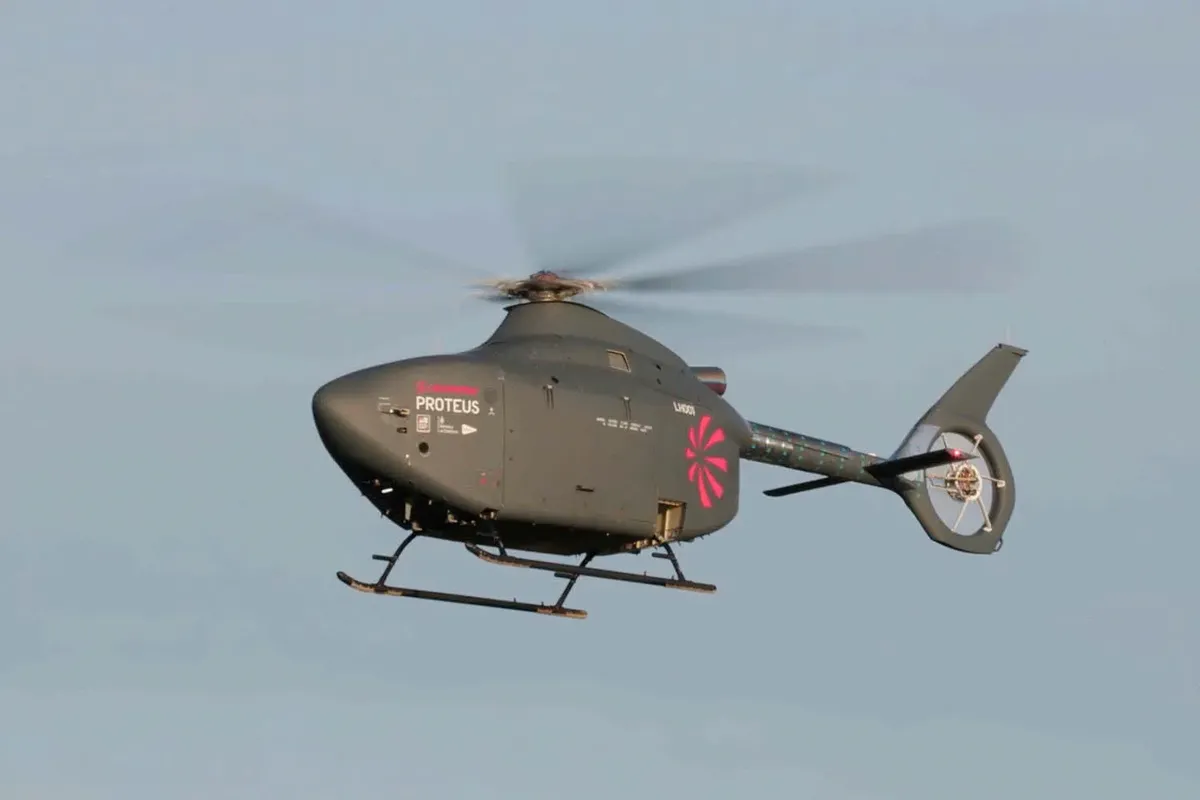
If the MoD funds Proteus into development, Leonardo gains access to UK operational requirements and test ranges that inform product design for NATO export sales; rejection would redirect Leonardo's autonomous helicopter R&D toward commercial or non-NATO markets, shifting allied rotary-wing autonomy dependency toward US or European suppliers.
The decision also sets precedent for UK appetite to fund homegrown autonomous platforms versus importing mature systems, which cascades into workforce and industrial base decisions across the UK defense aerospace sector.
The MoD decision point determines whether Leonardo advances Proteus toward operational service or deprioritizes the effort relative to competing autonomous helicopter programs (including potential US platforms via NATO interoperability).
A positive decision unlocks follow-on funding and accelerates Leonardo's entry into a market where Sikorsky (US), Airbus Helicopters, and emerging Chinese autonomous rotorcraft are competing for allied procurement.
Delay or rejection signals UK preference for either mature foreign systems or alternative autonomous platforms, which would affect Leonardo's medium-term revenue and UK industrial autonomy in rotary-wing unmanned systems.
The article does not specify the MoD's timeline for a decision, the funding quantum required for next phase, competing programs against which Proteus is being evaluated, or whether the decision involves NATO interoperability requirements.
Fault Lines
Strategic intelligence, synthesized daily — with a public track record. Every call graded against what actually happened.