House Armed Services Blocks E-3 Retirements Through FY27; Grants Military 'Right to Repair'
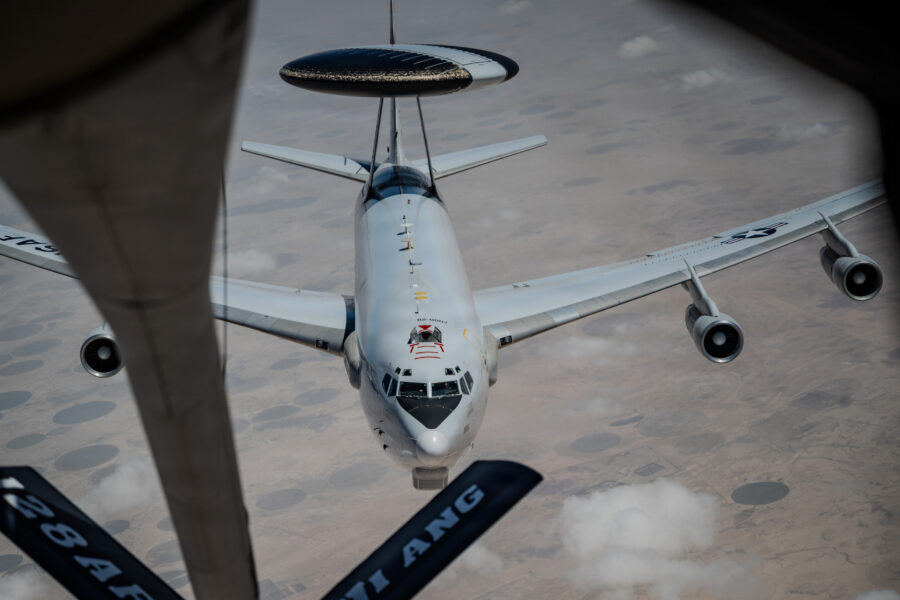
The 'right to repair' language is the real signal here. It signals Congressional frustration with sole-source sustainment contracts and manufacturer lock-in — a dynamic that has plagued legacy platforms like the E-3 and KC-135. If this language survives the full NDAA markup, it opens the door for depot-level maintenance to bypass OEM pricing on other aging airframes.
RTX's sustainment revenue on E-3 and legacy Raytheon systems faces pressure if third-party repair becomes authorized and funded.
This forces Air Force leadership to sustain a 30+ year-old airborne early warning platform through at least 2028, when production alternatives (E-7A Wedgetail) remain 2-3 years from operational deployment.
The constraint is operational: INDOPACOM and CENTCOM have zero buffer in AEW coverage if the E-3 fleet shrinks before E-7A achieves full-rate production. Watch whether Air Force requests emergency sustainment funding in the FY27 supplemental or accepts the risk of degraded ISR coverage in the Pacific.
What is the current E-3 fleet readiness rate, and how many airframes are actually available for deployment versus in depot maintenance? The amendment assumes the fleet can be kept airborne, but if availability is already below 60%, this mandate becomes operationally hollow.
Fault Lines
Strategic intelligence, synthesized daily — with a public track record. Every call graded against what actually happened.