China's Red Sword Exercise Scales to 200 Aircraft, Signaling Operational Tempo Surge
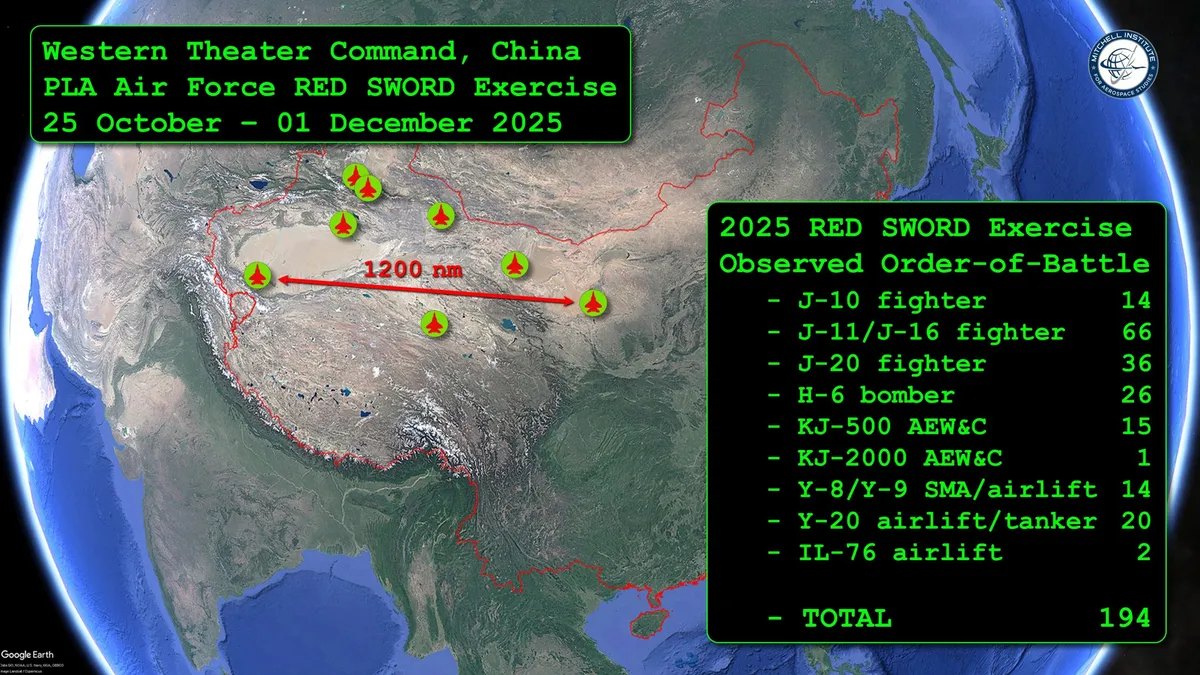
If this five-week tempo becomes routine, it compresses the decision window for allied procurement of attrition replacements and sustainment spares.
Taiwan's current F-16V inventory and South Korea's KF-21 production schedules were built on lower-intensity baseline assumptions; a confirmed shift to sustained high-tempo operations forces both to either accelerate procurement timelines (creating bottlenecks at Lockheed and Korea Aerospace) or accept higher peacetime readiness costs.
Scale alone does not indicate capability gain — Red Sword has grown incrementally for years — but sustained five-week duration at 200-aircraft density reveals willingness to absorb attrition rates and logistics costs at scale.
For U.S. Pacific Command force planners, this confirms China can execute multi-week sustained air operations in contested space, which directly informs Taiwan contingency modeling and allied air defense procurement timelines. The key variable is whether this represents annual baseline (forcing upward revision of PACAF readiness assumptions) or a one-time demonstration.
Defense primes (Lockheed, RTX, Boeing) should track whether this exercise data surfaces in FY27 Pacific Deterrence Initiative justifications — if it does, it will anchor higher funding requests for F-35 sustainment, AIM-120 production, and allied interoperability upgrades.
The article does not specify aircraft types, which determines whether the exercise tested 4th-gen or 5th-gen integration — a critical distinction for assessing PLA Air Force readiness against F-35-equipped allies.
Fault Lines
Strategic intelligence, synthesized daily — with a public track record. Every call graded against what actually happened.