11th Airborne Prioritizes Light Mobility Over Armor in Arctic Operations
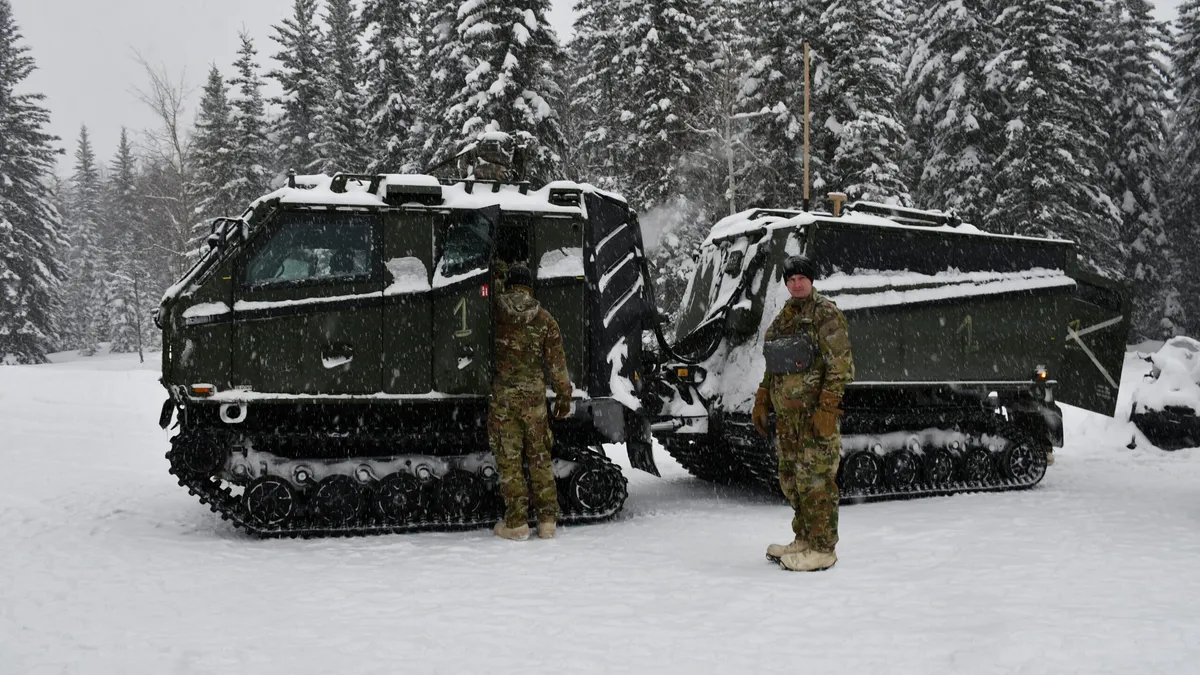
Arctic terrain constraints are forcing the 11th Airborne to reject the heavy-armor doctrine that dominates Army procurement strategy elsewhere, creating a market split where light-vehicle OEMs gain a protected customer segment while traditional armored-vehicle primes (General Dynamics Land Systems, Oshkosh) face reduced relevance in high-latitude operations.
If other services (Marine Corps, National Guard units deployed to Alaska) adopt similar Arctic-specific procurement, this could fragment Army vehicle standardization and complicate sustainment logistics.
This reflects a deliberate force design trade-off with procurement consequences for light-vehicle suppliers.
The 11th Airborne's stated preference for CATVs over armor systems will shape near-term vehicle acquisition decisions within Army Arctic operations, likely benefiting manufacturers of ultra-light mobility platforms (e.g., General Dynamics for ISVs, Polaris for CATV variants) over traditional armored vehicle primes.
The constraint is terrain-specific rather than budget-driven — Arctic geography forces the division away from the heavy-vehicle doctrine that dominates Army procurement elsewhere. Watch whether this Arctic-specific requirement propagates into broader Army doctrine or remains isolated to the 11th Airborne.
The article does not specify current CATV inventory levels, requested procurement quantities, or timeline for acquisition — critical details needed to assess whether this is a modest reallocation or a significant shift in 11th Airborne vehicle budgets.
Fault Lines
Strategic intelligence, synthesized daily — with a public track record. Every call graded against what actually happened.