Navy Selects 7 MUSV Designs for Sea Trials in Multi-Billion Expansion
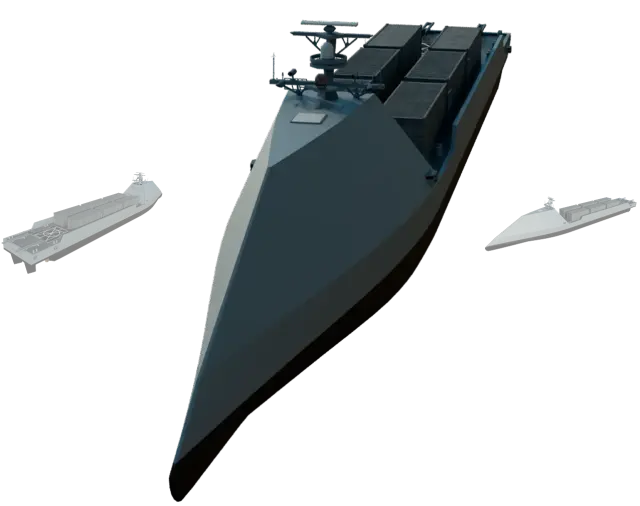
Seven designs in sea trials means the Navy expects to kill 4-5 by 2028, but parallel testing of this scale costs roughly $150-200M per year across all platforms — money that comes from the same O&M budget that funds munitions replenishment and maintenance for the existing fleet. If the Navy sustains all seven through 2027, the attrition in other readiness accounts becomes visible in FY28 budget submissions.
Watch whether NAVSEA requests a supplemental for MUSV testing or raids the surface combatant sustainment line.
The Navy is hedging its bets across seven platforms instead of converging on one or two designs — a sign that MUSV requirements remain unsettled and that the service is buying optionality rather than committing to a dominant architecture.
This delays the production ramp that the Navy needs to backfill losses from sustained Middle East rotations and Taiwan Strait contingency positioning. If the Navy doesn't downselect to 2-3 finalists by late 2027, the FY28-FY29 procurement window closes, pushing serial production past 2030 — exactly when the amphibious and logistics fleets face their highest strain.
What are the actual unit-cost targets for each MUSV design, and does any of the seven meet the Navy's stated $30-50M per-unit ceiling? If not, the 'multi-billion' commitment stretches across 15+ years instead of 5, which changes the timeline pressure entirely.
Fault Lines
Strategic intelligence, synthesized daily — with a public track record. Every call graded against what actually happened.