Spanish Navy Tests Hornet Block 1 Interceptor From Santa María Frigate
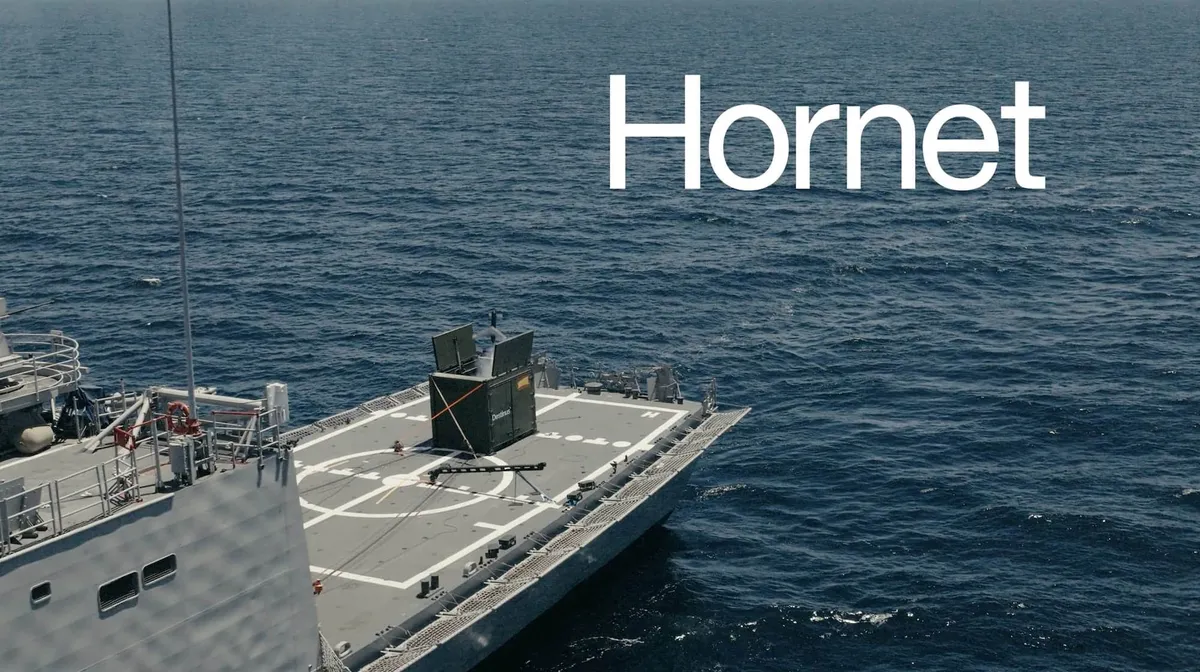
Containerization is a workaround to industrial capacity constraints in European air-defense production. If Santa María integrates Hornet successfully, it validates a model that Thales, Hensoldt, and Leonardo could replicate across allied navies — reducing dependence on US-made ESSM variants and accelerating the timeline for European air-defense autarky.
The test also signals Spain's pivot toward interoperability with the UK-led long-range strike coalition, positioning Spanish frigates as nodes in a distributed air-defense network rather than standalone platforms.
Spain is validating a containerized air-defense system that bypasses traditional ship integration timelines — critical for allied navies facing accelerated procurement schedules under AUKUS burden-sharing and NATO 3.5% GDP targets.
If Hornet Block 1 proves containerization works, it becomes a retrofit option for the five European allies co-developing the joint long-range strike program (UK, France, Germany, Italy, Poland), each facing existing frigate fleets that lack modern point-defense.
The test outcome determines whether Santa María-class vessels can absorb air-defense upgrades without drydock delays — a constraint that has stalled modernization for allied navies operating older platforms.
Did the test achieve the stated containerization objectives, or did it surface integration challenges that will extend the validation timeline? What is Destinus's production roadmap for Block 1 units, and how many units has Spain committed to procure?
Fault Lines
Strategic intelligence, synthesized daily — with a public track record. Every call graded against what actually happened.