Iran Campaign Exposes AWACS Capacity Crisis; E-3 Fleet Stretched Across Three Theaters
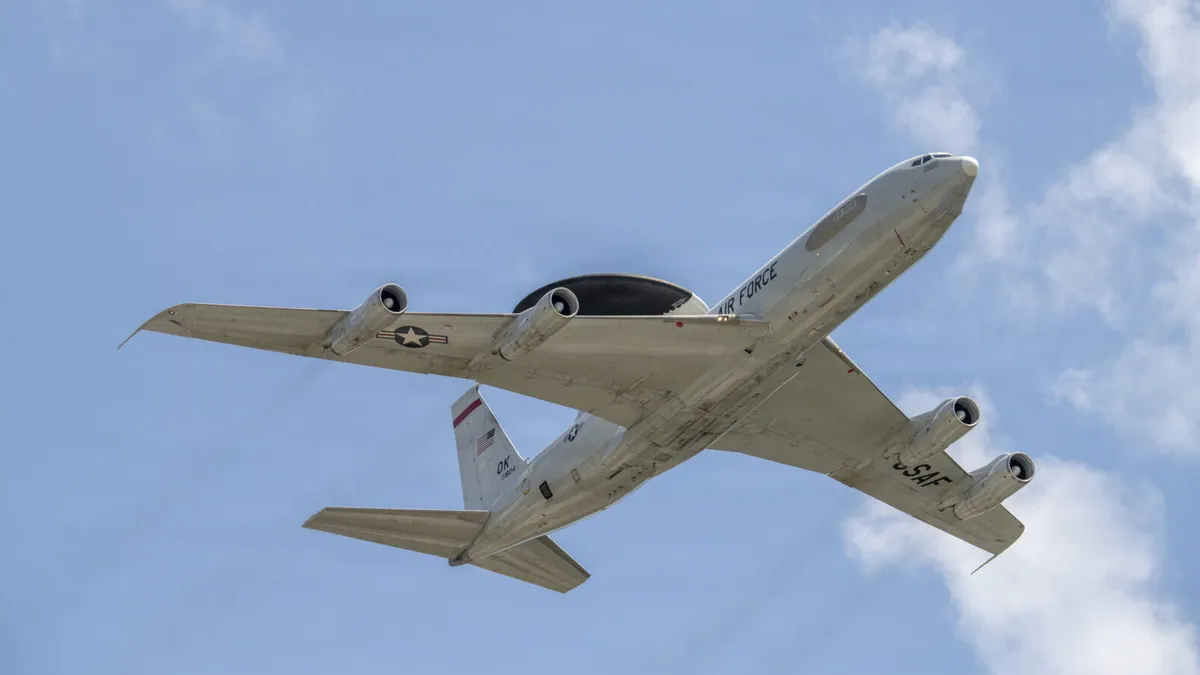
Sustained AWACS shortfall forces a choice between air-centric strike campaigns (which depend on continuous airborne command-and-control) and ground-heavy operations (which require manned air support).
If the Iran campaign continues into April-May and ground operations are greenlit, procurement timelines for E-8 JSTARS replacement and potential interim AWACS sustainment contracts will accelerate — but existing production slots are already committed.
This creates a 12-24 month window where force structure exceeds sensor availability, which will either compress operational tempo or force allied burden-sharing in AWACS provision (likely via NATO or Japan).
The E-3 AWACS fleet (estimated 31 operational aircraft across USAF and allied inventories) was already constrained pre-2026.
Concurrent operations against Iran, sustained B-52 operations from RAF Fairford, NATO air defense in Europe, and Indo-Pacific coverage create a zero-sum allocation problem. If the Iran campaign extends beyond weeks into months, force planners will be forced to choose between withdrawing coverage from one theater or accepting degraded command-and-control in another.
This directly affects whether the 10,000-troop ground operation under Pentagon consideration can be sustained with adequate air support. The article does not quantify current utilization or project when breaking points occur — critical gaps for determining whether this is a planning constraint or an operational one.
The article does not specify: (1) current E-3 tasking rates and daily sortie requirements for Iran operations; (2) how many aircraft are allocated to each theater; (3) whether allied AWACS (NATO, Saudi, Japanese) are being called forward; (4) maintenance pipeline status and whether depot-level repai...
Fault Lines
Strategic intelligence, synthesized daily — with a public track record. Every call graded against what actually happened.