Turkish Navy TB3 Carrier Drones Debut in Baltic, Extending NATO Interop Test
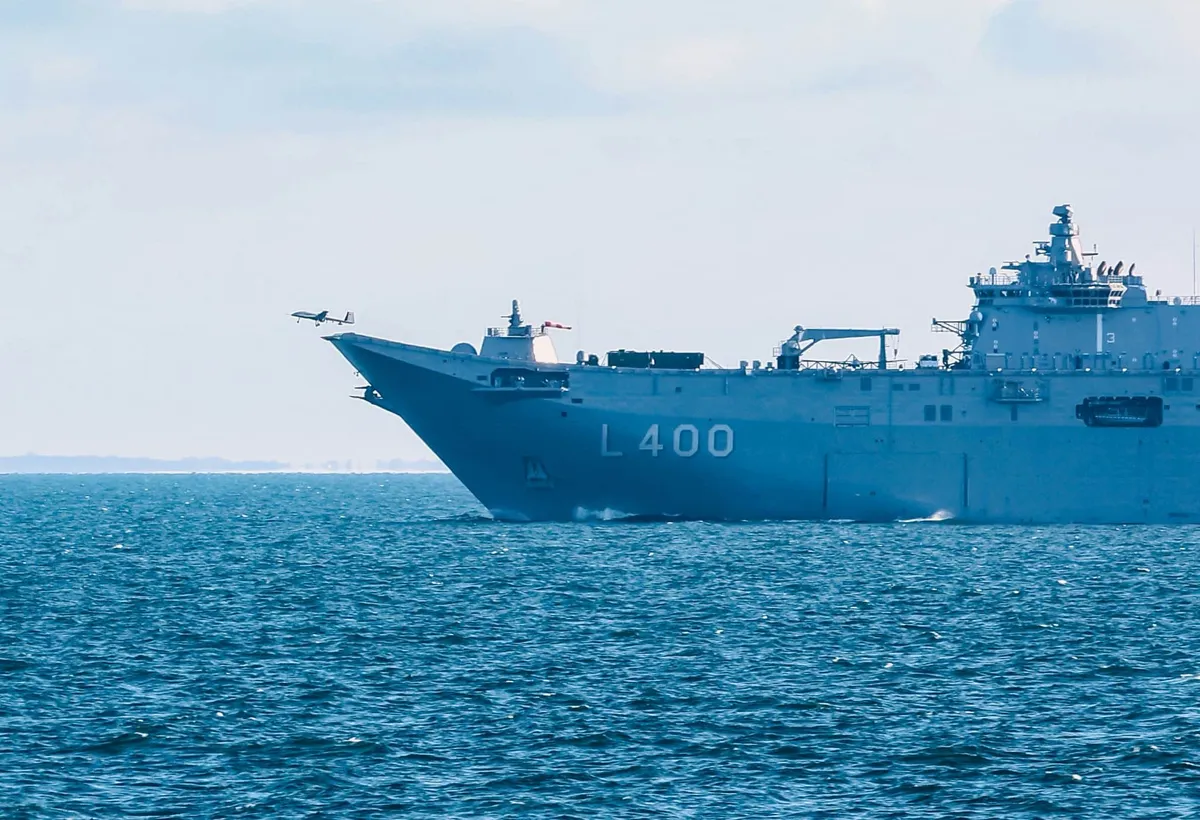
TB3 operational validation in NATO exercises directly feeds Turkish drone export licensing negotiations with allied navies seeking non-U.S. carrier solutions.
If the Baltic deployment demonstrates reliable NATO interop, Turkish defense exporters (Baykar and state procurement bodies) can cite NATO operational proof-of-concept to justify sales to NATO-aligned navies—Poland, Romania, Greece—that currently lack carrier capacity or seek alternatives to U.S. MQ-4C Triton.
Conversely, any integration friction will constrain Turkish UAS market access and reinforce U.S. dominance in NATO maritime ISR, preserving Northrop Grumman's competitive moat on allied carrier drone contracts.
This is the first real-world integration test of Turkish-origin carrier drones within a NATO multinational exercise.
The TB3 is a domestic Turkish design; its operational validation in a NATO environment tests interoperability protocols, data-link standards, and command-and-control architecture that will determine whether Turkish naval systems can plug into allied air defense and targeting networks.
If integration succeeds, it creates a precedent for non-U.S., non-European naval drone adoption within NATO and potentially opens export pathways for Turkish UAS to other allied navies. If friction emerges—incompatible Link-16, targeting data latency, or rules-of-engagement conflicts—it signals constraints on Turkish industrial integration into the alliance's sensor-to-shooter chain.
The result affects Turkish defense industrial positioning and NATO's distributed maritime operations doctrine.
The article does not disclose whether the TB3 achieved full NATO data-link integration, what operational constraints (if any) were encountered, or whether NATO issued any follow-on guidance on Turkish platform certification for future exercises or contingency operations.
Fault Lines
Strategic intelligence, synthesized daily — with a public track record. Every call graded against what actually happened.