2,000 Marines Deploy to Middle East as Iran Conflict Enters Third Week
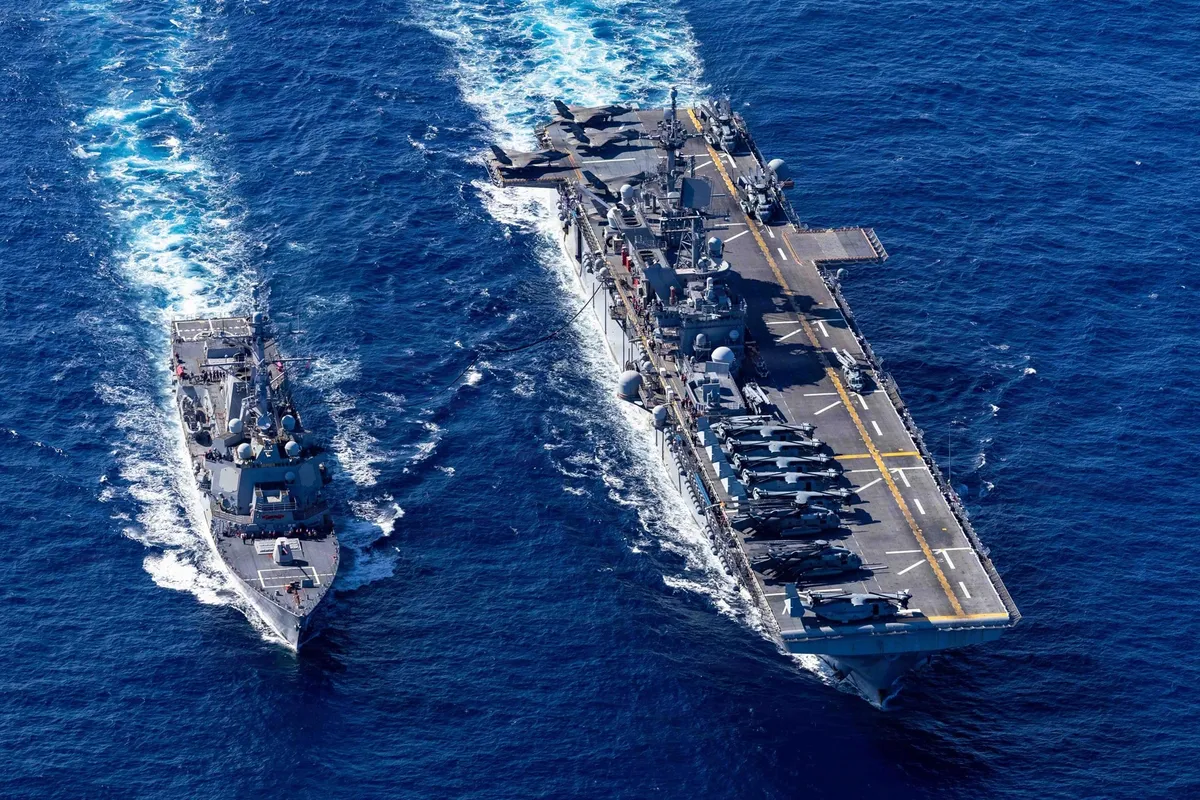
The MEU deployment locks in a ground-force footprint that will consume logistics capacity and forward basing for months, directly competing with Pacific Command's ability to maintain force rotation timelines for Taiwan contingency readiness.
If the Iran campaign extends beyond Q2 2026, the MEU rotation cycle will compress, forcing either extended deployments (personnel retention risk) or earlier-than-planned rotations from other theaters.
Simultaneously, the deployment signals to regional allies (Saudi Arabia, UAE, Iraq) that the U.S. intends to maintain combat presence, which may constrain their diplomatic off-ramps with Iran and lock them into the escalation cycle.
This represents a transition from air-centric operations to amphibious force projection, signaling preparation for sustained regional presence or potential ground operations.
The MEU's composition (2,000 personnel plus equipment) and transport vessels (one amphibious assault ship, one dock landing ship) are designed for extended expeditionary operations, not rapid strike-and-withdraw missions.
This suggests planners are preparing for a conflict duration measured in months, not weeks, and may be positioning forces for contingencies including humanitarian evacuation, base security, or direct ground intervention if the air campaign fails to achieve political objectives. The deployment also reduces Pacific Command's force posture in the Indo-Pacific during a period of elevated Taiwan contingency alertness.
The article does not specify the MEU's destination port, timeline for arrival, or operational tasking upon arrival. It is unclear whether this deployment is in addition to or replacement of existing MEU rotations, and whether other regional forces (Army, additional Navy assets) are being repositione...
Fault Lines
Strategic intelligence, synthesized daily — with a public track record. Every call graded against what actually happened.