BAE Systems Begins Type 26 Frigate #6 Construction, Extending Glasgow Shipyard Workload Into 2030s
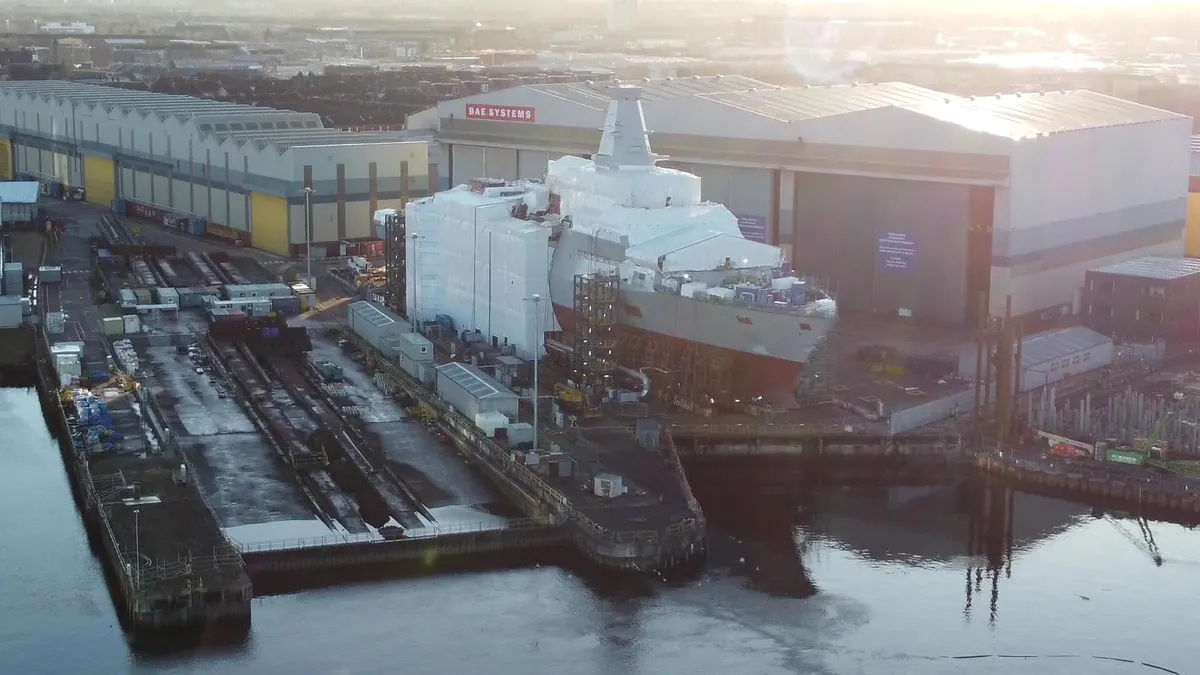
Type 26 production continuity determines BAE Systems' ability to retain skilled shipyard labor and maintain frigate design teams through the 2030s — a prerequisite for any successor frigate program. If HMS Newcastle represents the final frigate and no follow-on is committed, Govan's workforce will contract sharply after delivery, forcing redundancies and eroding the industrial base for future naval construction.
Conversely, if the RN or allied navies (Australia, Canada) order additional hulls, the yard's utilization extends and production efficiency gains from the learning curve may reduce unit costs for later ships.
Type 26 construction sustains BAE's Govan shipyard through the 2030s and locks in Royal Navy frigate procurement at a fixed production cadence.
However, the article omits critical details: no delivery date for HMS Newcastle, no confirmation of whether a seventh frigate is planned, and no cost or schedule variance data from the first five hulls. Without knowing whether Type 26 unit costs have stabilized or whether the RN plans additional hulls beyond six, the strategic value of this workload extension cannot be assessed.
If this is the final frigate, the yard faces a capability gap post-2035.
The article does not state when construction will actually begin, the planned delivery date for HMS Newcastle, whether additional Type 26 frigates are planned beyond this sixth hull, or any cost/schedule performance data from the first five ships that would indicate whether this program is on track.
Fault Lines
Strategic intelligence, synthesized daily — with a public track record. Every call graded against what actually happened.