Babcock Advances Type 31 Production—Two Ships Simultaneously in Build Cycle
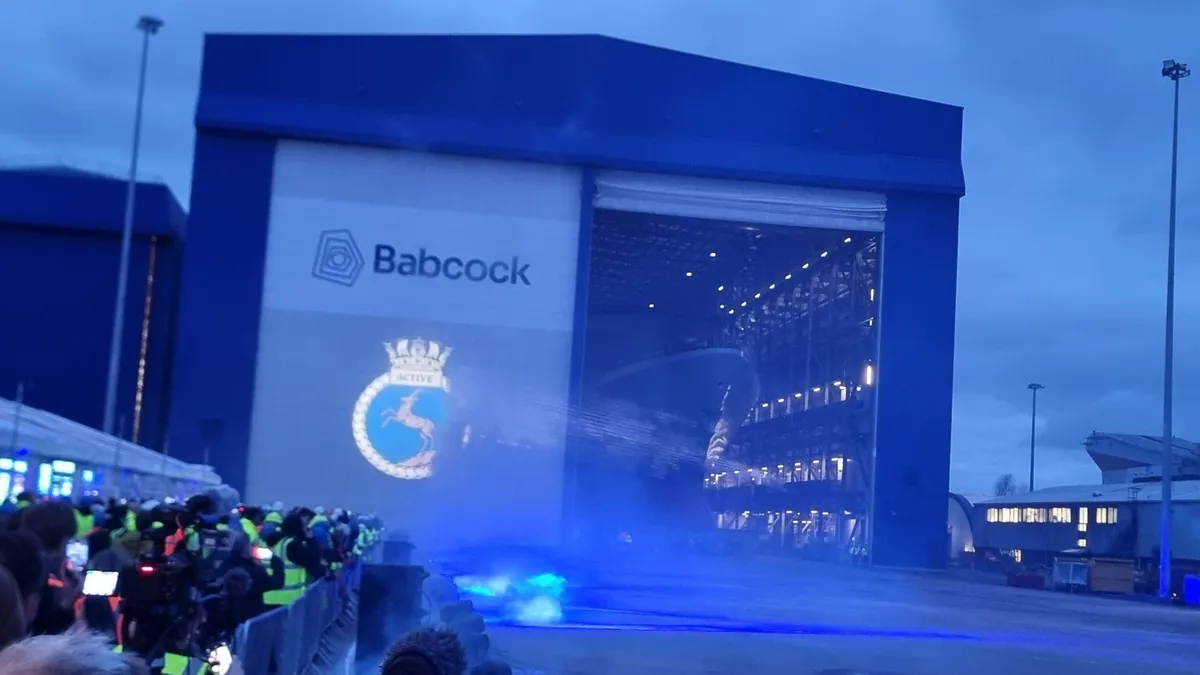
Sustained Type 31 production directly underpins Royal Navy frigate numbers available for standing commitments in the Indo-Pacific and Eastern Atlantic through the late 2020s.
If Babcock maintains this cadence, the Navy can phase out older frigates without readiness gaps; if supply-chain friction slows either steel-cutting or systems integration, the Navy must either extend older-hull service life (raising sustainment costs) or reduce forward-deployed frigate rotations (weakening allied interoperability in contested waters).
The production rate also signals Babcock's capacity for future orders—either additional Type 31s for export (Australia, Poland) or the follow-on Type 32 general-purpose frigate, both of which depend on Rosyth bandwidth.
The simultaneous advancement of two Type 31s—one entering fabrication, one exiting assembly—confirms Babcock is sustaining the production cadence needed to deliver the planned five-ship class on schedule.
This matters for Royal Navy frigate availability in the 2027–2030 window and directly affects Babcock's cash flow visibility and headcount planning at Rosyth.
The constraint to watch is whether supply-chain throughput (steel, combat-systems integration, electrical components) can keep pace with this dual-track tempo, particularly as HMS Tamar and HMS Tyne are already in service and earlier units may require concurrent maintenance.
The article does not specify the planned delivery dates for HMS Active or HMS Bulldog, the current status of the remaining two Type 31s (HMS Sutherland and HMS Nile), or whether this production pace reflects acceleration relative to the original programme baseline.
Fault Lines
Strategic intelligence, synthesized daily — with a public track record. Every call graded against what actually happened.