U.S. Army Deploys HIMARS to Philippines via Island-Hop Route; Bypasses SCS Chokepoint
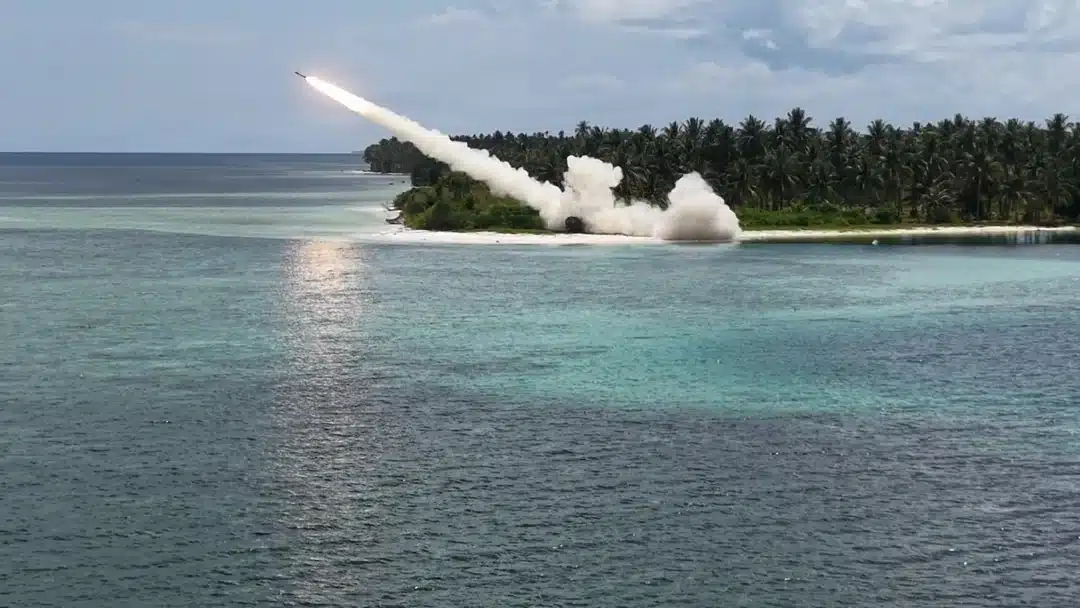
This is part of a broader recalibration of U.S. force posture in response to Project Freedom's failure. The May 5-6 pause in Hormuz escort operations exposed the vulnerability of concentrated naval task forces to coordinated air and missile attacks — the CMA CGM San Antonio damage and UAE air defense strain made that plain.
Island-hopping HIMARS deployments offer an asymmetric counter: distributed, mobile, land-based precision strike that doesn't require naval presence and doesn't cluster forces into a single anti-ship target. If this becomes standing practice, it pressures the PLA to develop deeper strike ranges or accept coverage gaps in the SCS — both expensive options.
The U.S. military is operationalizing a dispersed deployment model for precision strike systems in the Indo-Pacific — moving away from concentrated forward bases toward island-distributed firing positions that complicate Chinese targeting calculus and reduce exposure to anti-ship missiles.
The 7th Infantry Division's HIMARS can strike targets at 300km range from island positions across the Philippines archipelago, creating coverage gaps for the PLA Navy that weren't present when systems were concentrated at Subic Bay or Clark.
Watch whether this model expands to Japan and Taiwan contingency planning — if HIMARS distributed across Okinawa, Luzon, and Mindanao becomes doctrine, it signals a shift from peninsula defense to archipelago denial.
Does the article specify how many HIMARS units were deployed, or was this a single launcher demonstration? The operational relevance hinges on whether this is a proof-of-concept or the beginning of a standing rotational posture.
Fault Lines
Strategic intelligence, synthesized daily — with a public track record. Every call graded against what actually happened.