Lockheed Martin Expands THAAD Output to 400 Units Annually Under $35B Multiyear Contract
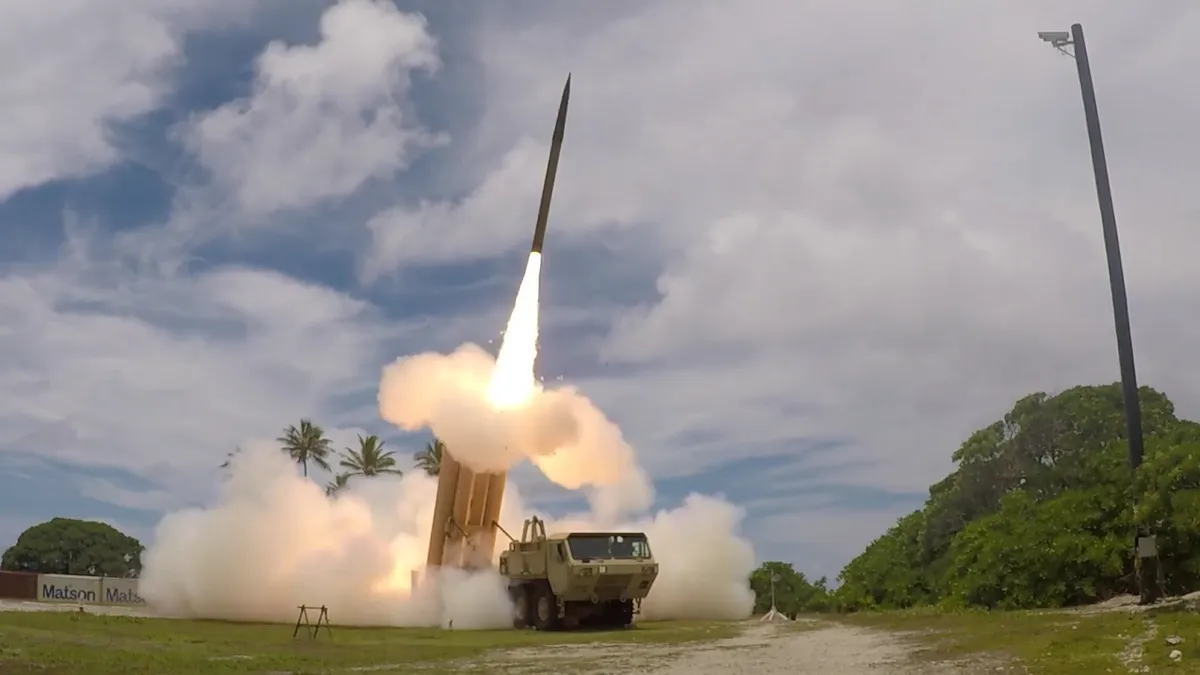
The THAAD ramp is not isolated. Taiwan just budgeted $6.6 billion for 208,200 attack drones and 1,446 reconnaissance drones — a parallel surge in air defense consumption that will pull from the same supply base (electronics, propulsion, guidance).
If Lockheed accelerates THAAD to 400/year and Taiwan sustains drone procurement at scale, the competition for rare-earth permanent magnets and solid rocket motor capacity becomes acute by late 2027. The Pentagon's $21 billion munitions appropriation assumes a certain price per unit; if Lockheed's costs rise due to supply constraints, the number of rounds actually produced falls short of the congressional assumption.
This locks in munitions production capacity at a moment when Congress has already appropriated $21 billion for stockpile replenishment and the Pentagon is requesting an additional $42.3 billion supplemental.
Lockheed's Tucson line now has contractual obligation to deliver 304 additional units annually — a production ramp that will consume fabrication capacity, skilled labor, and supply-chain bandwidth through at least 2029.
The constraint is not funding: it's whether Lockheed can source the composite casings, radar components, and solid rocket motors without cannibalizing production of other air defense systems (Patriot, HIMARS) or causing price escalation that eats into the munitions budget.
Watch the Q3 2026 earnings call for Lockheed's supply-chain commentary and any requests for industrial-base support funding in the FY27 supplemental.
Does Lockheed's $35B contract include penalties or incentives tied to annual delivery rates, or is it a cost-plus arrangement that shields the contractor from production delays?
Fault Lines
Strategic intelligence, synthesized daily — with a public track record. Every call graded against what actually happened.