ISW: Russia Begins Spring Offensive on Donetsk Fortress Belt; Limited 2026 Breakthrough Expected
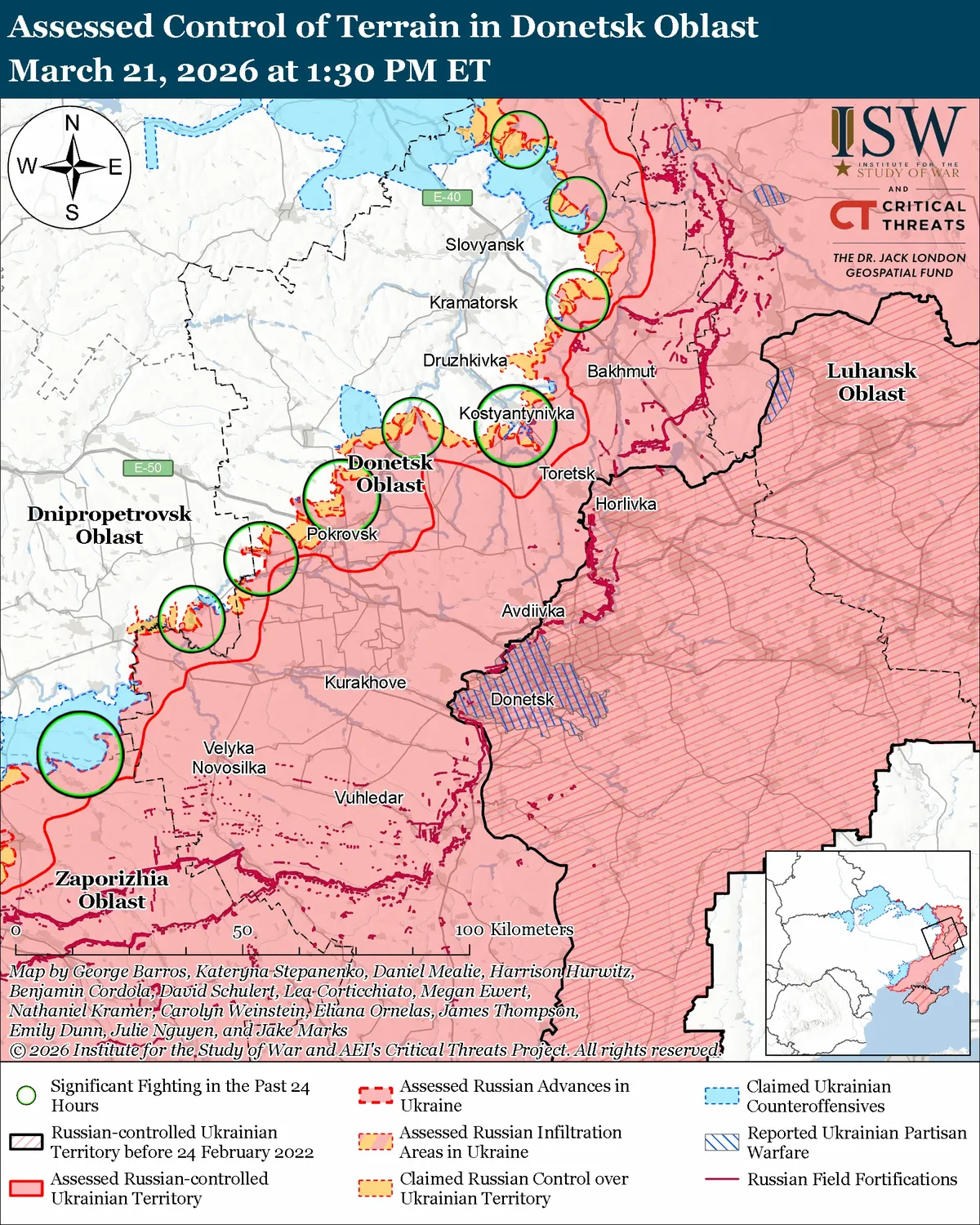
Ukraine's defensive performance in the Fortress Belt directly determines the credibility of allied defense-industrial commitments through 2026-2027.
If Russian advances remain tactically limited, allied procurement timelines for long-range fires and counter-drone systems can remain on schedule; if breakthroughs exceed forecasts, accelerated ammunition deliveries and air defense systems become urgent, shifting capital allocation within defense industrial bases.
Additionally, the pace of Russian attrition in this offensive phase will influence NATO's assessment of Russian regeneration capacity and thus the duration and cost of the broader conflict, affecting long-term procurement strategy across European allies.
This assessment confirms the offensive phase has commenced, not merely threatened.
Ukraine's defensive posture now enters active testing under sustained Russian pressure, meaning force allocation decisions made in prior months are now being validated or exposed in real time. If ISW's forecast of limited Russian breakthrough holds, it suggests Ukraine's fortified positions retain operational viability through 2026—a critical input for allied procurement timelines and sustainment contracts.
Conversely, if Russian tactical gains exceed ISW's expectations, it signals Ukraine's defensive depth is shallower than assessed, forcing a reassessment of ammunition consumption rates and allied supply commitments.
The article does not specify which sectors of the Fortress Belt are under heaviest pressure, the estimated Russian force composition committed to the offensive, current casualty or attrition rates, or the rate at which Russian forces are advancing.
Fault Lines
Strategic intelligence, synthesized daily — with a public track record. Every call graded against what actually happened.