EU-South Korea Defense Pacts Hedge Against U.S. Commitment Uncertainty
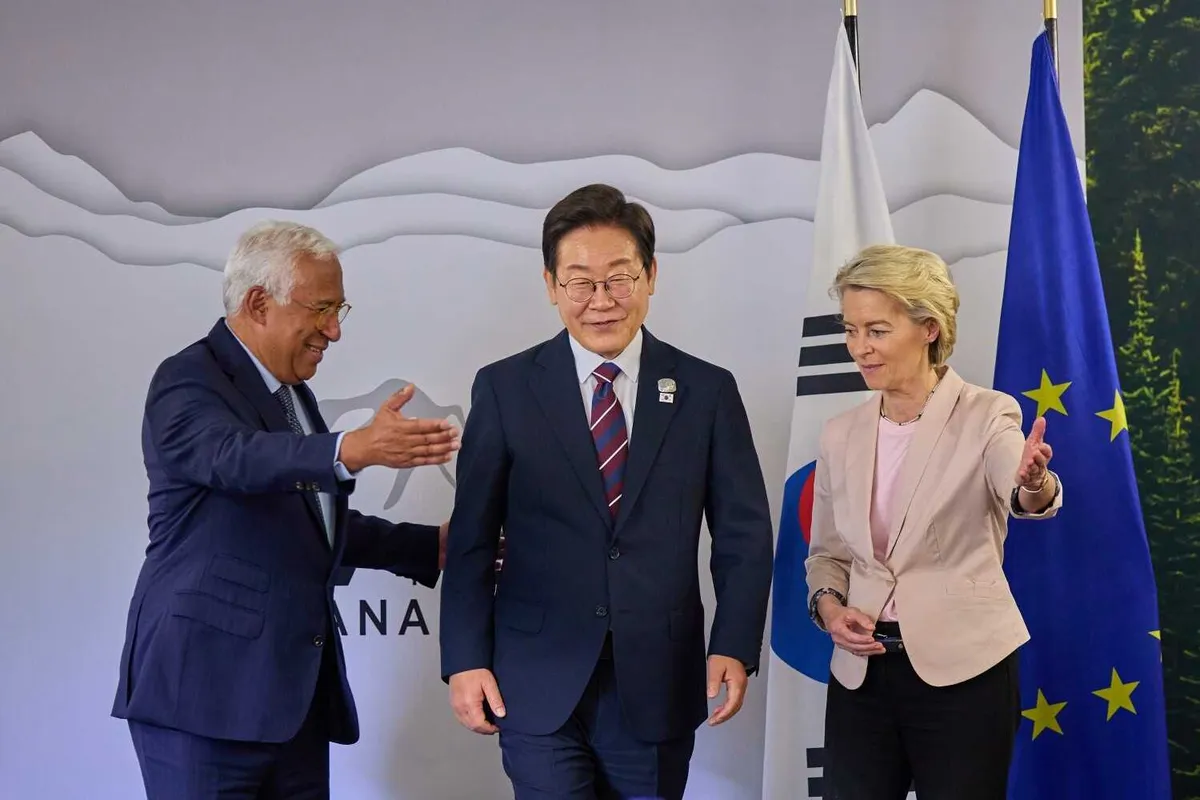
If EU-Korea defense partnerships materialize beyond rhetoric, Korean shipbuilders and missile manufacturers gain access to European procurement budgets and technology standards, shifting capital flows away from U.S. primes on allied contracts.
Simultaneously, Korean dependence on U.S. extended deterrence (nuclear umbrella, THAAD, intelligence sharing) creates a structural conflict: Seoul cannot fully pivot to Europe while North Korea remains a near-term threat, forcing Korea to hedge rather than decouple — this hedging itself becomes a negotiating lever in U.S.-Korea alliance management.
This is a think tank argument for alliance reorientation, not a confirmed policy shift or procurement decision.
However, it reflects real anxiety among allied planners about U.S. reliability — anxiety that will shape defense procurement and industrial policy decisions in both regions over the next 18-24 months.
If EU and Korean defense ministers act on this logic, expect: (1) acceleration of independent European air-defense and naval programs (FCAS, MGCS, air defense variants) that reduce NATO-U.S. dependency; (2) Korean defense exports to Europe (missiles, radar, shipbuilding) to increase as Seoul seeks non-U.S. revenue streams and political leverage; (3) joint EU-Korea standards initiatives in AI, autonomous systems, and cyber that bypass U.S. export controls.
The constraint is political will and industrial capacity — neither region has the capital or timeline to fully replace U.S. systems in the near term. Watch whether formal defense agreements or joint procurement announcements follow this rhetoric.
The article does not specify what concrete defense or procurement initiatives the EU and Korea are currently discussing, whether any are already in negotiation, or which allied defense ministers are driving this proposal.
Fault Lines
Strategic intelligence, synthesized daily — with a public track record. Every call graded against what actually happened.