South Korea's Conscription Shortfall Forces Mandatory Female Military Service by 2027
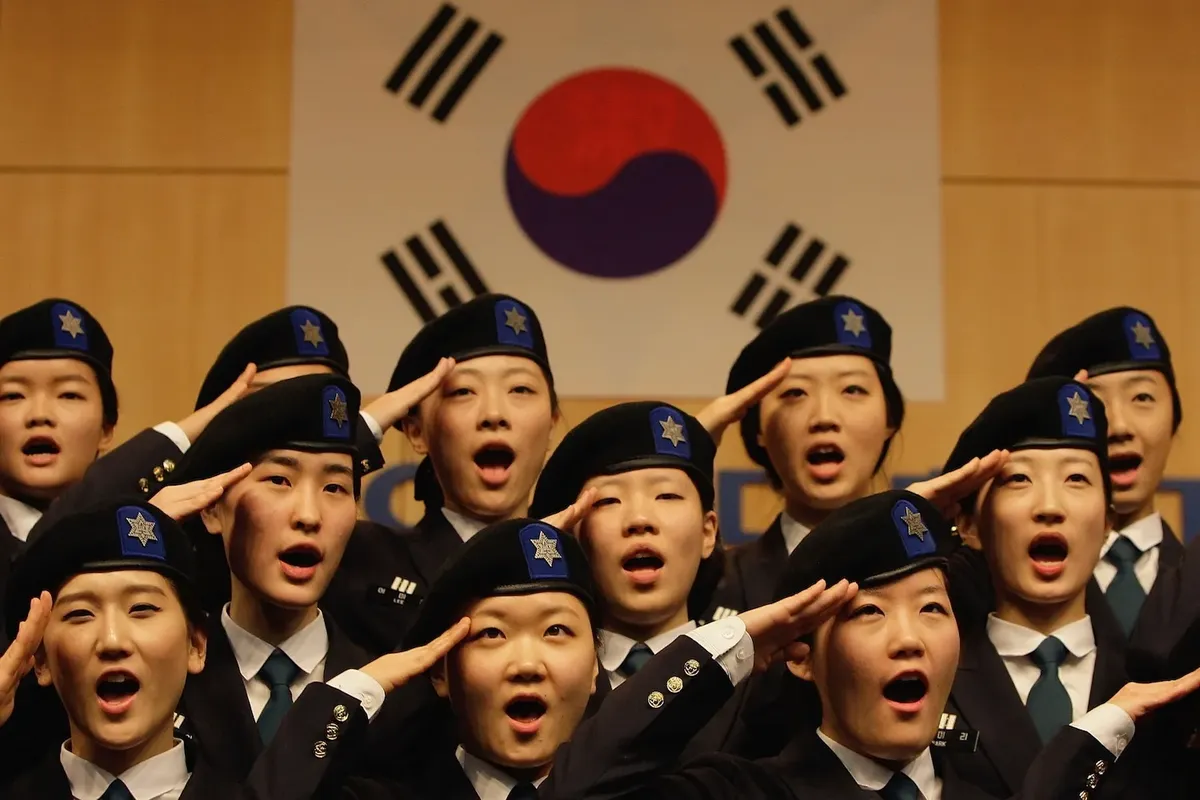
Mandatory female conscription, if enacted, reduces Seoul's fiscal headroom for advanced procurement by absorbing training and personnel infrastructure costs that would otherwise fund modernization. This delays South Korea's shift toward unmanned systems and long-range strike platforms, which in turn affects the technical interoperability assumptions embedded in U.S.
Indo-Pacific force planning and allied co-production roadmaps (e.g., KF-21 fighter development timelines). Simultaneously, the conscription crisis exposes a structural constraint on Seoul's ability to maintain force size without technological substitution—a problem that U.S. defense planners must account for in Korea-contingency war games and deterrence signaling.
South Korea's force structure assumes a conscript base of approximately 300,000 annual recruits; demographic projections now suggest that number will drop below sustainable levels by 2027-2028 (source: article does not cite specific projection, but this is the implicit driver).
Mandatory female conscription would add an estimated 100,000-150,000 annual recruits, but implementation requires legislative change and faces political resistance.
For defense investors, this signals Seoul will pursue force quantity over technological modernization in the near term—expect budget pressure on advanced systems (missiles, autonomous platforms) and extended timelines for Next-Generation Fighter development.
South Korea's defense industrial base (Hanwha, Hyundai Heavy Industries, Korea Aerospace Industries) may see reduced capital allocation for R&D and procurement, while labor-intensive shipbuilding and munitions production gain relative priority. The policy also affects interoperability planning for U.S.-ROK combined operations, which assume current force composition.
The article does not specify the military's actual recruitment shortfall (how many conscripts are being missed annually), the projected conscript-age population decline over the next decade, or whether the government has commissioned formal studies on force structure alternatives to conscription (e.
Fault Lines
Strategic intelligence, synthesized daily — with a public track record. Every call graded against what actually happened.