France Awards Naval Group Contract for Large Oceangoing UCUV; Sea Trials 2028
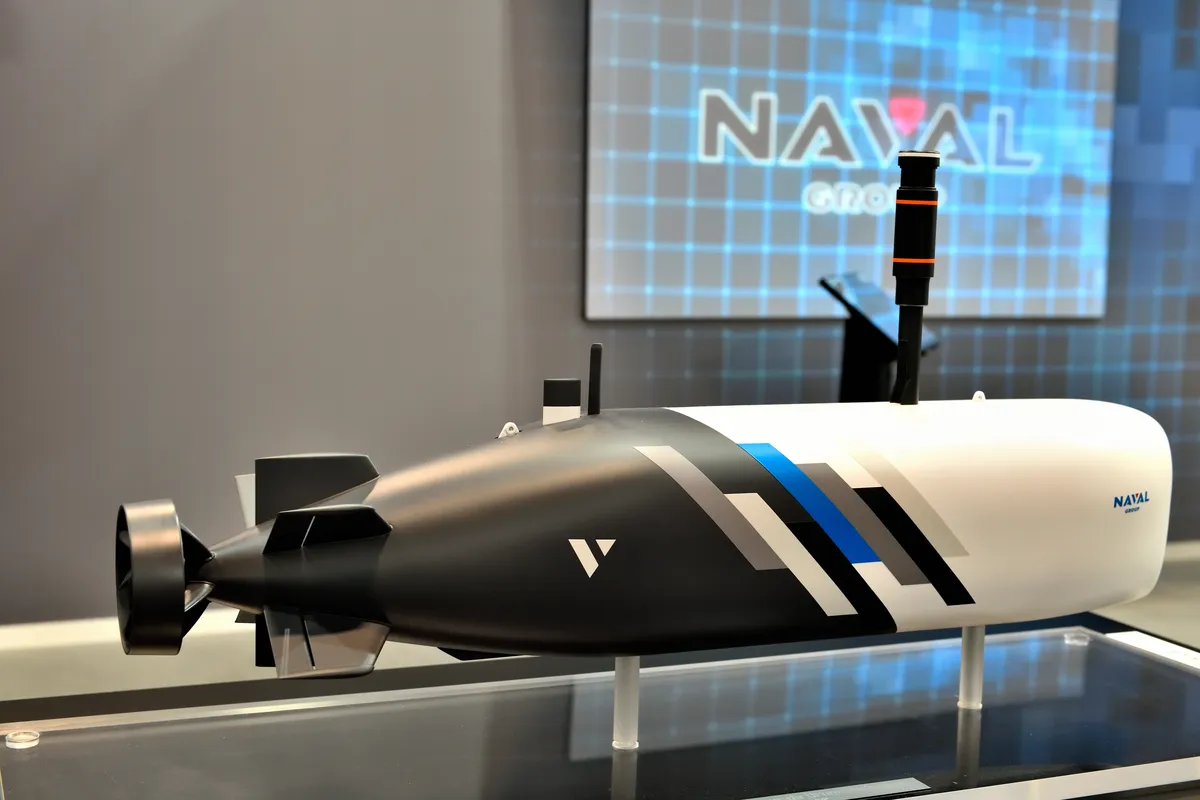
France's move consolidates a European underwater autonomy cluster alongside UK and allied programs, but the timing exposes a capability gap: Australia already has Ghost Shark in contract, the UK has tested heavy torpedo fires from extra-large UUVs, and the U.S. Orca is in development.
France's 2028 sea trials date puts the demonstrator two to three years behind operational equivalents, which means the French Navy is entering a market where procurement timelines are already compressed.
France joins a select tier of naval powers fielding large autonomous underwater strike systems — alongside the U.S. (Boeing Orca), UK, and Australia (Anduril Ghost Shark at A$1.7B).
The 2028 timeline puts French UCUV development on the same cadence as allied programs, but the emphasis on "controlled autonomous decision-making" signals France is betting on loitering autonomy rather than tethered remote operation, which changes the operational doctrine for sustained presence in contested waters.
The €30 million commitment authorization and €17 million payment appropriation for 2026 are seed funding; the 2024-2030 defense law allocates €5 billion across drones and robots, so underwater systems are competing for a fixed pool against aerial and ground platforms.
Watch whether Naval Group's demonstrator reaches autonomous firing decisions or remains human-in-the-loop — that distinction determines whether France is building a strategic asset or a surveillance tool.
What is the endurance specification for the UCUV demonstrator, and does it match the Orca or Ghost Shark class, or is France targeting a different operational envelope?
Fault Lines
Strategic intelligence, synthesized daily — with a public track record. Every call graded against what actually happened.