Air Force validates modular autonomy framework for collaborative combat aircraft
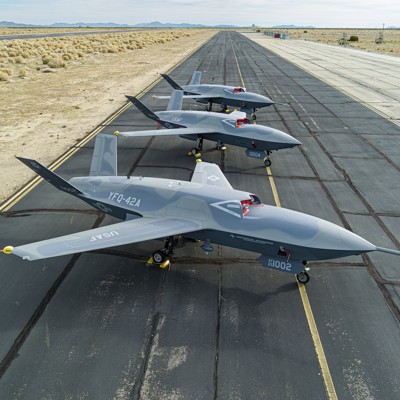
This is primarily a Power Projection story with secondary Market Forces implications. On power projection: A-GRA standardization reduces integration risk and accelerates fielding of autonomous wingmen, which directly affects force readiness and doctrine for distributed air operations.
On market forces: standardization shifts competition from full-stack autonomy development to modular component quality and cost, favoring contractors with established software and AI talent pipelines. Limited geopolitical friction relevance unless A-GRA becomes export-controlled or NATO interoperability discussions follow.
If A-GRA becomes the Air Force's standard autonomy interface, it reduces vendor lock-in and accelerates CCA procurement by allowing modular component reuse across multiple airframes and contractors.
This benefits prime contractors (RTX, Northrop, General Dynamics) who can develop standardized autonomy modules once and license them broadly, rather than building custom stacks per platform. The risk: if standardization is incomplete or adoption is voluntary rather than contractual, fragmentation persists and integration costs remain high. Watch whether follow-on CCA contracts explicitly mandate A-GRA compliance.
The article does not specify: (1) which contractors participated in the flight tests, (2) the scope of autonomy behaviors validated (e.g., formation flying, threat response, autonomous decision-making authority), (3) whether A-GRA compliance will be mandatory on future CCA contracts or merely recomm...
Fault Lines
Strategic intelligence, synthesized daily — with a public track record. Every call graded against what actually happened.