Hanwha Ocean Wins South Korea's KDDX Destroyer Lead-Ship Contract Over HD Hyundai
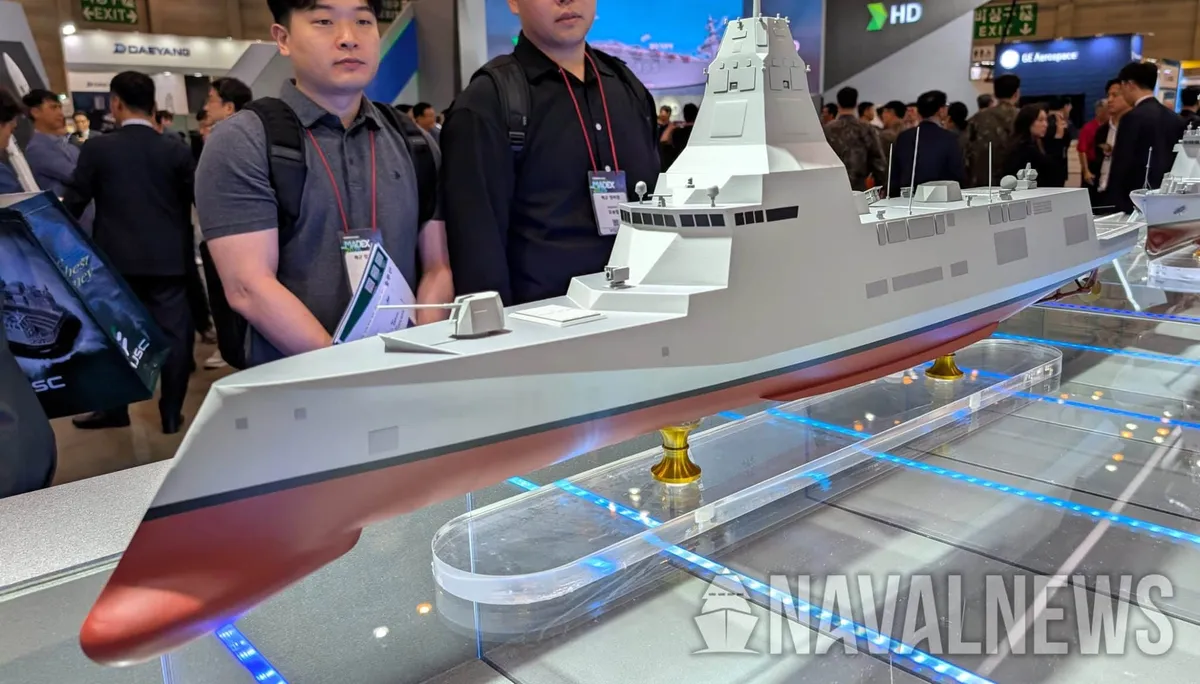
This selection consolidates Hanwha's position as the ROK Navy's primary surface-combatant builder and likely locks HD Hyundai into submarine and amphibious-lift roles—narrowing its addressable market in Korean defense shipbuilding. If Hanwha executes the lead ship on schedule and within budget, the company becomes the default choice for KDDX production Lots 2-5, potentially worth $8-12B over 15 years.
Conversely, if cost or schedule overruns occur during detailed design, DAPA may face pressure to split production between yards or revisit HD Hyundai's role—a scenario that would expose fragmentation in Korean industrial base strategy.
Hanwha Ocean's selection locks in the industrial lead for a multi-decade program that will shape South Korean shipbuilding capacity and naval modernization through the 2040s.
The decision directly affects HD Hyundai's strategic position in Korean defense shipbuilding—a company that has dominated naval construction but now faces exclusion from the flagship platform.
DAPA's evaluation criteria and timeline for lead-ship construction milestones will determine whether Hanwha can execute the detailed design phase without cost or schedule slip; any delay cascades into the ROK Navy's force-structure timeline for replacing aging Kwanggaeto-class and Ulchi Mundeok-class destroyers.
Watch the contract signature and design-phase gate reviews (typically Q4 2026 for Korean defense programs) to confirm whether Hanwha maintains momentum or encounters technical or industrial constraints.
What was the margin of DAPA's evaluation—did Hanwha win decisively on technical merit, cost, or schedule, or was this a close call that could trigger protest or reconsideration?
Fault Lines
Strategic intelligence, synthesized daily — with a public track record. Every call graded against what actually happened.