Army May Restart XM30 Bradley Replacement Competition Via RFI
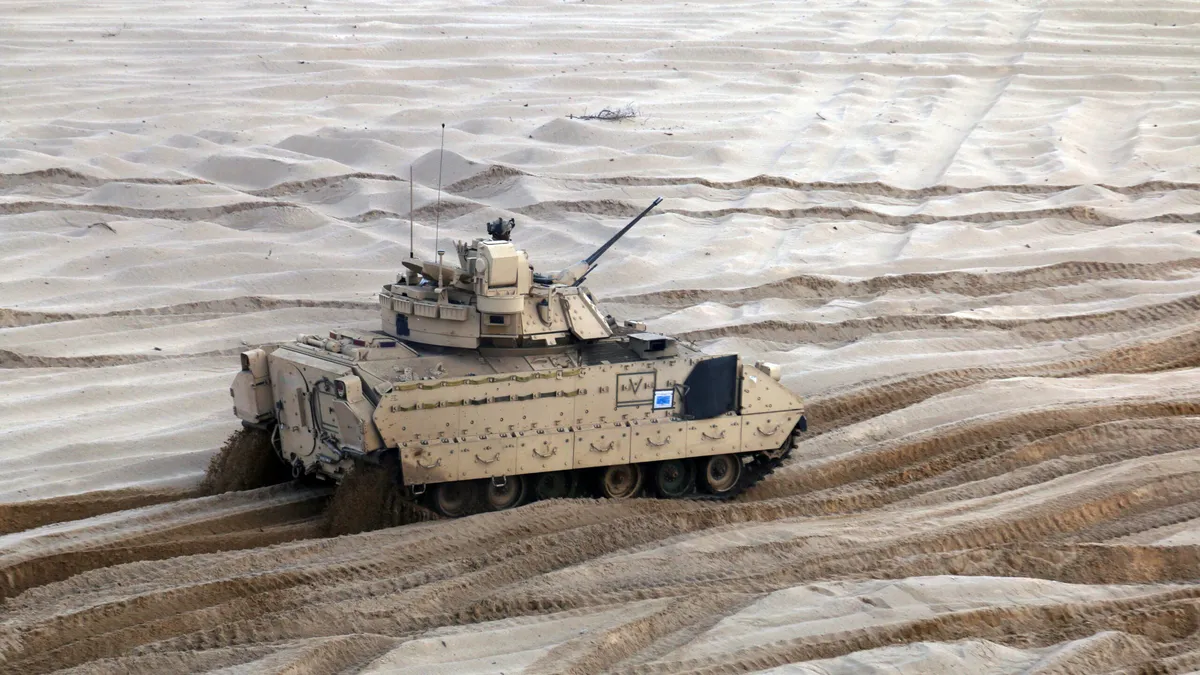
A restart of the XM30 competition delays the replacement of an aging platform and compresses the production and fielding timeline, which directly affects Army readiness posture for near-peer conflict in the Indo-Pacific.
If the competition is revamped to incorporate new requirements (e.g., autonomous capability, enhanced cross-domain integration), it may force General Dynamics and competitors to redesign mature prototypes, further extending the schedule and increasing development costs — a dynamic that typically favors larger primes with deeper balance sheets and existing Army relationships over smaller innovators.
If confirmed, a restart or major revision of the XM30 competition would delay fielding of a replacement vehicle that has already consumed years of development and investment by General Dynamics and other competitors.
This would extend Bradley operational life and compress the window for production ramp-up before potential peer-conflict scenarios in the Indo-Pacific.
The article provides no evidence of why the Army might restart the competition, what specific deficiencies triggered reconsideration, or which contractors are at risk — making it impossible to assess whether this reflects a technical failure, a budget constraint, or a strategic shift in light vehicle doctrine.
The article does not identify which Army officials are considering this action, what specific problems with the current XM30 design or competition process prompted reconsideration, what timeline the Army is considering for an RFI, or whether any contractors have been notified.
Fault Lines
Strategic intelligence, synthesized daily — with a public track record. Every call graded against what actually happened.