Shield AI's Hivemind Flies CCAs in Multi-Ship Formation, Executes BVR Counter-Air Tactics for First Time
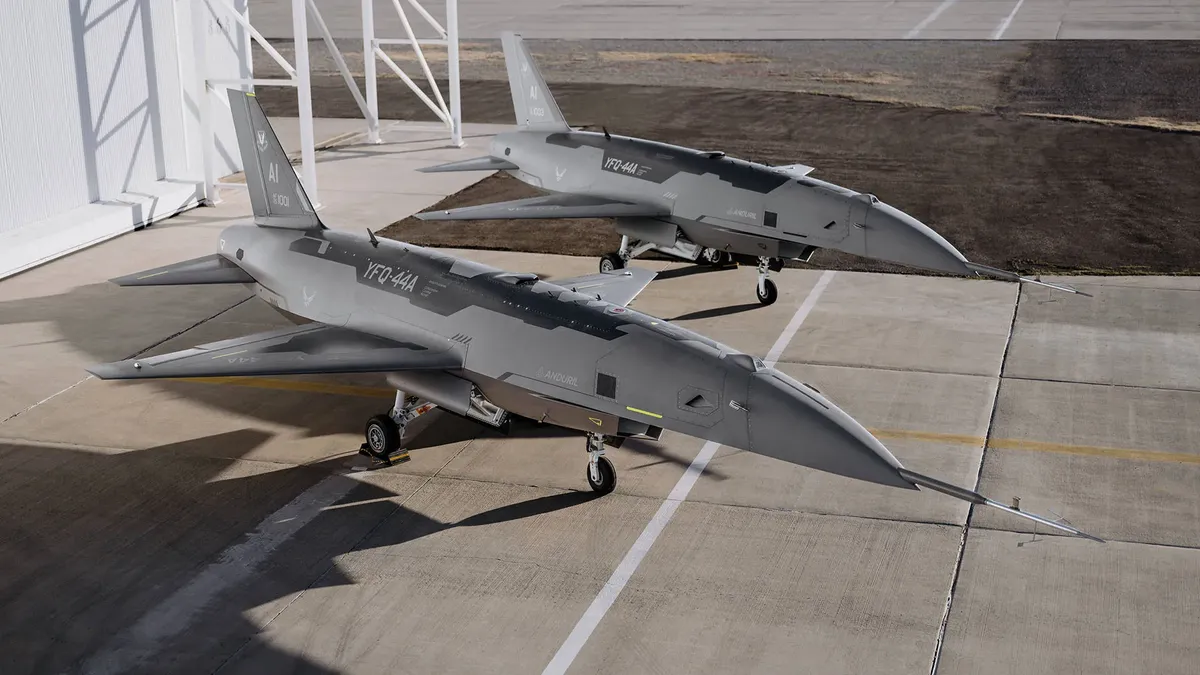
Shield's October 26 milestone arrives one month after an F-22 completed airborne command of a YFQ-44A, and one week after Shield announced its $5.3 billion acquisition of Echodyne for solid-state radar.
If Echodyne's radar integrates into Hivemind's sensor stack, the CCA gains an organic BVR targeting capability rather than relying on the crewed quarterback for cueing — which would shift the human-machine teaming model from directive to collaborative and accelerate the autonomy threshold the Air Force needs to clear before the 2032 fleet target.
Anduril, whose YFQ-44A is the competing CCA platform, now faces a competitor that controls both the autonomy software and the radar sensor layer.
Multi-ship BVR counter-air is the specific tactical capability the Air Force needs CCAs to perform alongside crewed fighters in a contested Indo-Pacific environment — formation flight and autonomous air combat maneuvers in the same exercise is a materially different threshold than single-ship demonstrations.
Shield's claim that the software release cycle is approaching overnight turnaround matters for the 2032 fielding target: a 500-aircraft fleet requires rapid iteration, and the gap between test tempo and production tempo is where CCA programs have historically slipped.
The $2.37 billion FY2027 program request now has a concrete milestone behind it that program managers at Air Force Materiel Command will use to defend the line in the FY2028 budget cycle.
How many aircraft actually flew in formation on October 26, and which CCA platform — YFQ-44A or the competing variant — participated? The release withheld both details, which are the minimum needed to assess whether this was a two-ship proof-of-concept or a tactically meaningful package.
Fault Lines
Strategic intelligence, synthesized daily — with a public track record. Every call graded against what actually happened.