Hungary Leaked EU Iran War Deliberations to Lavrov in Real Time During Meetings
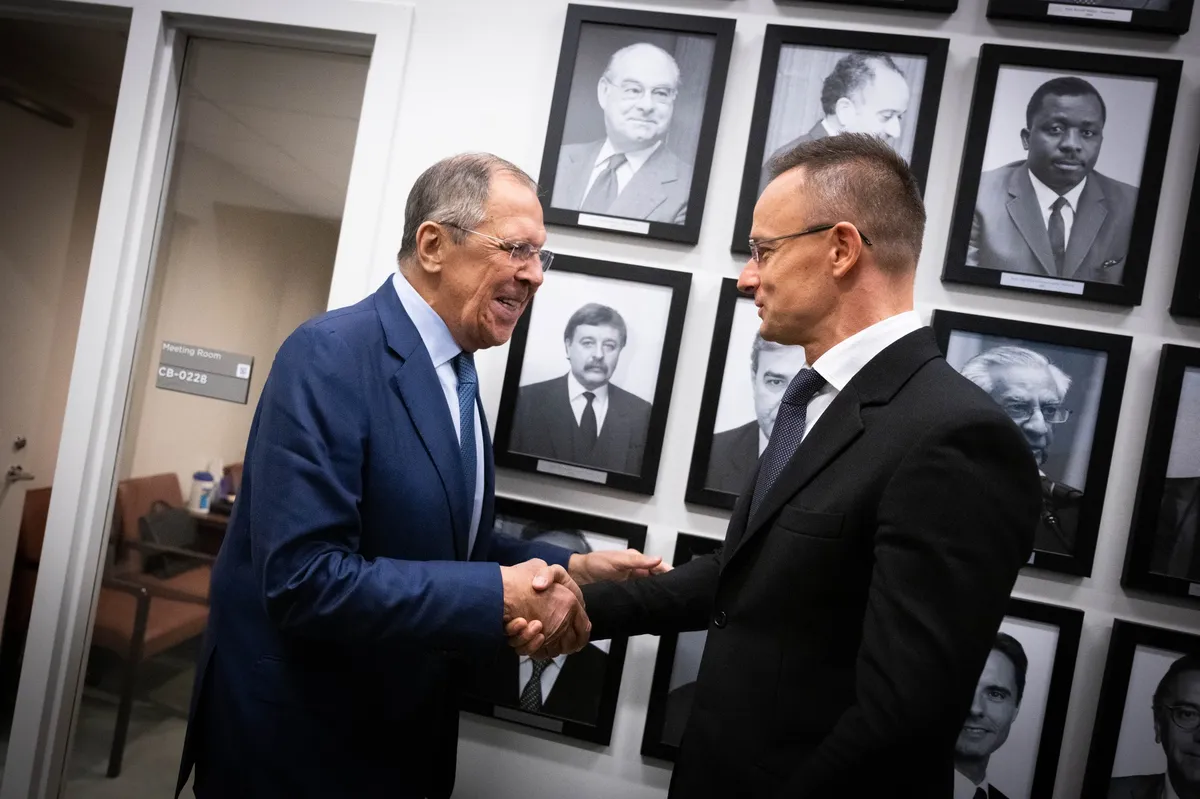
Hungary's real-time intelligence feed to Russia directly undermines the allied cohesion Trump administration cited as a justification for escalation against Iran. If EU defense spending commitments, NATO burden-sharing negotiations, and military support decisions are being disclosed to Moscow before implementation, then US force planning that depends on allied predictability faces a counterintelligence liability.
This also creates a veto point for Russian diplomatic countermoves — Moscow can now tailor its own responses (diplomatic, military, economic) to allied decisions before those decisions are locked in, converting the conflict into an asymmetric information game favoring Russia.
This confirms operational intelligence compromise at the highest EU decision-making level during a five-day sustained military campaign.
Russia gains tactical advantage in coordinating responses to Western military action and can preempt allied consensus-building. For defense investors, this signals that EU defense procurement and force coordination decisions—including NATO burden-sharing and allied support commitments Trump has demanded—are being transmitted to a hostile intelligence service in near-real time.
Hungary's NATO membership and EU seat create a structural vulnerability that cannot be quickly remedied through contract or procurement adjustments; it requires geopolitical realignment. The timing during active conflict (not peacetime espionage) elevates the operational risk for any US-allied military planning that depends on EU cohesion.
The article does not specify: (1) what specific EU deliberations Szijjártó disclosed (e.g., sanctions policy, military support, intelligence sharing); (2) whether other EU/NATO members are conducting similar leaks; (3) what operational consequences (if any) have been observed from Russia acting on t...
Fault Lines
Strategic intelligence, synthesized daily — with a public track record. Every call graded against what actually happened.