US Coast Guard Joins Philippine Patrol Near Scarborough Shoal; First Joint Exercise Amid Chinese Build-Up Concerns
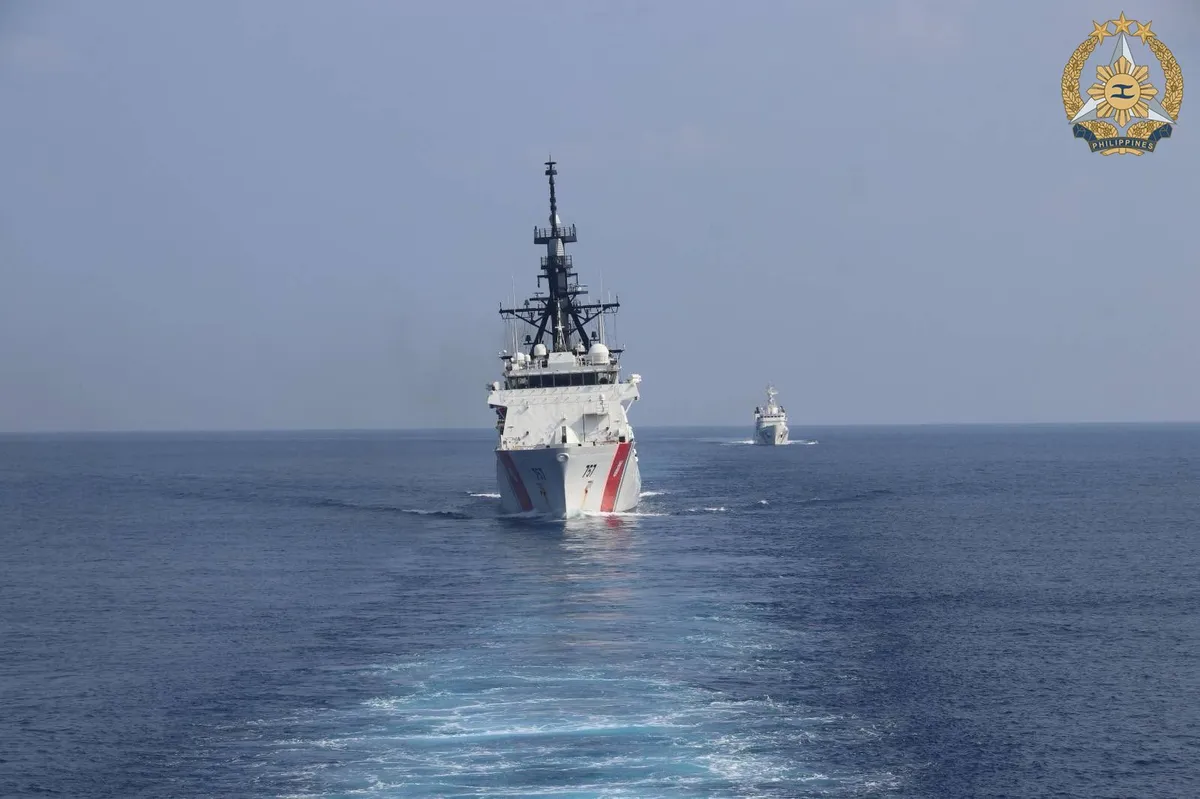
The timing matters: this patrol occurs as China is actively constructing military infrastructure at its nuclear ICBM sites (per the May 29 satellite imagery signal), suggesting Beijing is hardening its strategic posture across multiple domains simultaneously.
If the U.S. and Philippines establish a regular cadence here, it forces China to choose between accepting routine allied presence at Scarborough or escalating to intercept USCG vessels—a move that would trigger NATO Article 5 considerations if it results in U.S. military casualties. The Philippines gains leverage in its own South China Sea claims without having to risk its own navy.
The U.S. is operationalizing the 2023 commitment to joint patrols, which signals to Beijing that the Philippines can count on direct U.S. presence in the South China Sea's most contested feature.
The mechanism is straightforward: if the U.S. Coast Guard is rotating through these exercises on a regular cycle, Manila has a credible deterrent against Chinese fait accompli tactics at Scarborough—the shoal that has been the flashpoint for every U.S.-China naval confrontation in the SCS since 2012.
Watch whether USCG establishes a quarterly rotation schedule or announces a permanent forward-deployed detachment in the Philippines.
Did the patrol detect any new Chinese construction at Scarborough, or was this purely a show-of-force exercise? The article cites 'concerns' but not confirmation of actual structures.
Fault Lines
Strategic intelligence, synthesized daily — with a public track record. Every call graded against what actually happened.