82nd Airborne Deploys AI, C2 Network to Synchronize 100+ Assets in Project Freedom
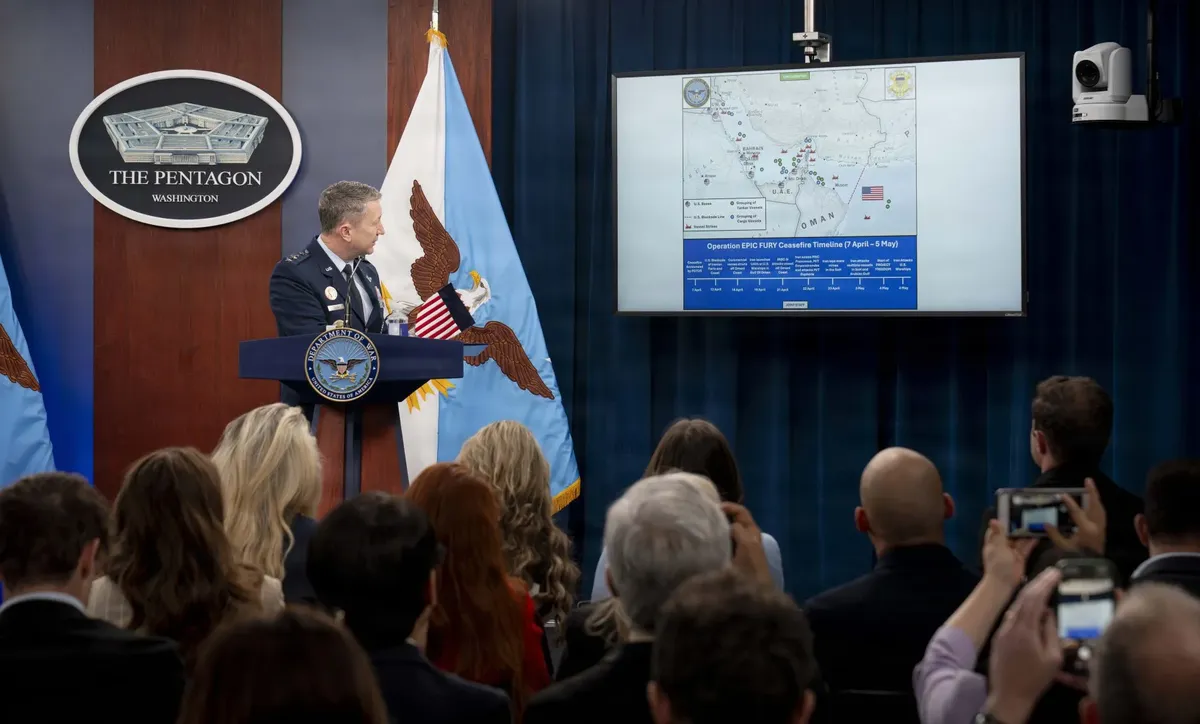
The 82nd's insertion into Project Freedom's command chain reveals that Trump's escort operation was not pre-planned with adequate C2 infrastructure. If the Navy and CENTCOM had designed this operation with dedicated command ships, satellite relay, and AI-enabled targeting before launch, the Army would not need to backfill.
This forces a choice: either the operation will stabilize once Navy-organic systems take over (meaning the 82nd redeploys by late Q2), or the Army becomes permanently embedded in Hormuz operations, which drains readiness for the Indo-Pacific contingency the Pentagon claims is the priority.
The 82nd Airborne's deployment of AI-enabled C2 infrastructure to Project Freedom exposes a critical bottleneck: the Army is pulling a continental U.S. division's AI and network assets into a maritime operation that the Navy and Central Command should own.
This suggests either CENTCOM lacks organic C2 capacity to manage 100+ simultaneous air and surface platforms, or the hastily launched escort operation was planned without adequate command infrastructure pre-positioned. For defense primes building AI/C2 systems (Raytheon, Northrop, L3Harris), this is a live test under fire—failures in the strait get immediate visibility to Congress and the White House.
For the 82nd Airborne, diverting AI and C2 personnel to Hormuz reduces the division's readiness for rapid-reaction contingencies elsewhere (Taiwan, Korea, Eastern Europe). The timeline matters: if the Hormuz operation extends beyond Q3 2026, the 82nd's rotational readiness cycle breaks, forcing either extended deployment or backfill from Reserve component units. Watch whether Gen.
Caine's statement signals confidence in the AI system or desperation about manual coordination failures in the first 48 hours of combat.
What specific AI and C2 systems is the 82nd deploying—DCGS-A, MOSA-B, or experimental platforms? And is the 100+ asset count accurate, or does it include decoys and support aircraft that inflate the synchronization burden?
Fault Lines
Strategic intelligence, synthesized daily — with a public track record. Every call graded against what actually happened.