Iran's Decentralized Command Limits Assassination Impact on Strategic Continuity
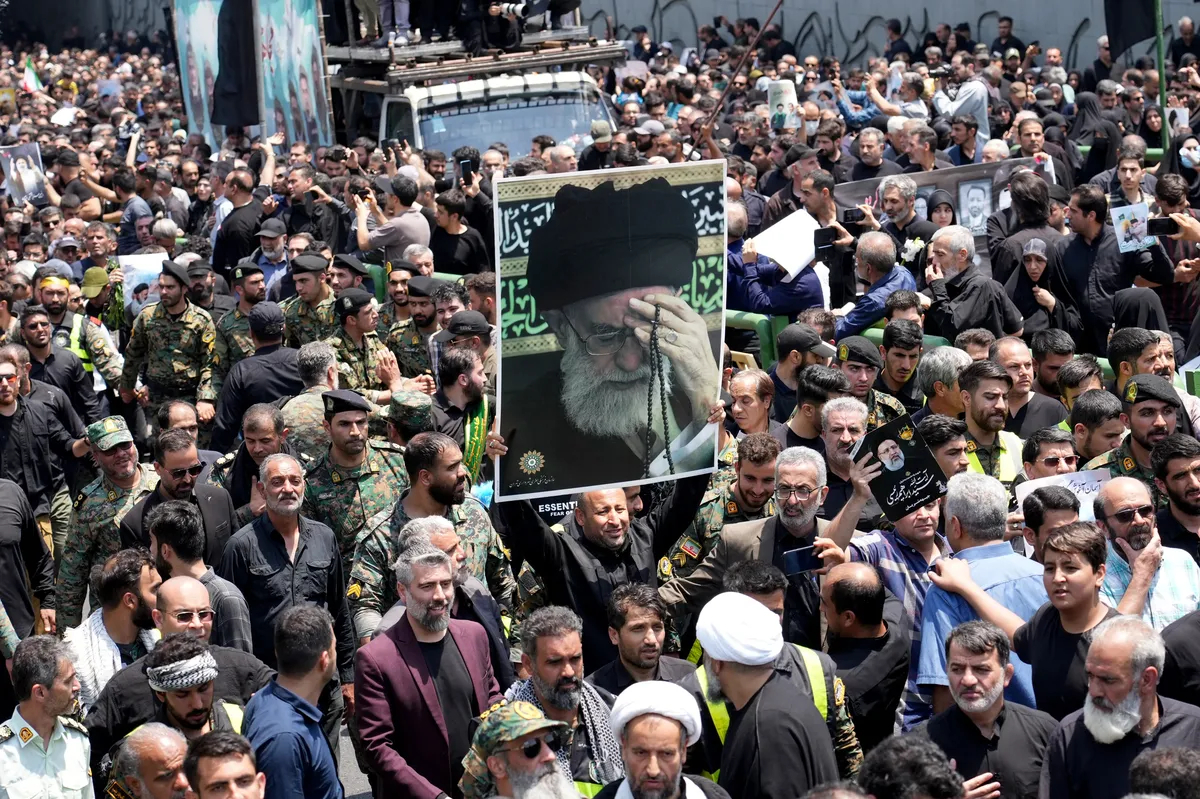
If Iran's decentralized command structure truly insulates strategic programs from leadership disruption, targeting campaigns must shift from decapitation to infrastructure destruction—forcing U.S. and Israeli planners to prioritize missile production facilities, uranium enrichment sites, and proxy logistics hubs over political assassination.
This reallocation of strike resources away from personality-based targeting toward industrial targets increases demand for precision munitions, ISR capacity, and damage assessment, directly benefiting Raytheon (GBU precision platforms), Northrop (RQ-180/high-altitude ISR), and Lockheed (JDAM variants).
If accurate, this assessment reduces the operational calculus for decapitation strikes as a deterrence or degradation tool against Iran.
Defense planners relying on leadership targeting to disrupt Iranian nuclear programs, proxy networks, or missile development may face diminishing returns; institutional resilience means successor regimes maintain operational continuity without strategic pause. Conversely, if the analysis overstates Iran's institutional depth, targeting could prove more disruptive than the article suggests.
The critical variable is whether Iran's IRGC command-and-control actually survives loss of the Supreme Leader or whether symbolic/religious authority (distinct from operational command) proves more fragile than the article implies.
The article does not specify which Iranian military or proxy command nodes are most critical to specific capabilities (ballistic missiles, drone production, Hezbollah/Houthi coordination), nor does it address whether successor leadership could face internal power struggles that paralyze decision-mak...
Fault Lines
Strategic intelligence, synthesized daily — with a public track record. Every call graded against what actually happened.