House Authorizers Push Second Arleigh Burke Destroyer into FY27 Budget
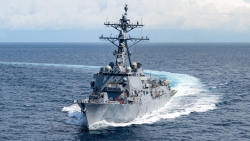
If Congress mandates two destroyers in FY27 and the Navy has only budgeted one, the service faces a $1.8B–$2.1B reprogram decision. That money comes from either (a) deferring DDG-51 Flight III production into FY28, compressing the delivery window and stressing the industrial base, or (b) cutting from other shipbuilding accounts — likely the Columbia-class SSBN or LCS sustainment.
Bath Iron Works, which builds DDG-51s, has been operating below optimal capacity; a second hull accelerates utilization but also signals congressional confidence in the Arleigh Burke design at a moment when the Navy is pivoting toward distributed surface warfare and smaller, cheaper vessels.
This forces a decision point for Navy leadership and the Office of the Secretary of Defense: accept a congressional mandate that diverges from the service's own shipbuilding strategy, or defend the current plan to the Hill and risk appropriations friction in FY27.
The mechanism is straightforward — if the authorizers embed this requirement in the NDAA markup (expected June-July), the Navy cannot simply absorb it into the existing $20B+ annual shipbuilding budget without deferring other hull starts or stretching delivery timelines. Watch the Senate Armed Services Committee markup for whether they adopt the House language or push back.
What is the House's rationale for the second destroyer? Is this driven by a specific operational gap (Taiwan Strait contingency, carrier strike group escort shortfall), a domestic shipyard capacity argument (Bath Iron Works or Huntington Ingalls), or a broader industrial-base hedge against future cu...
Fault Lines
Strategic intelligence, synthesized daily — with a public track record. Every call graded against what actually happened.