Ukraine Builds 822 km of Anti-Drone Road Tunnels; Supply Lines Harden Against Aerial Targeting
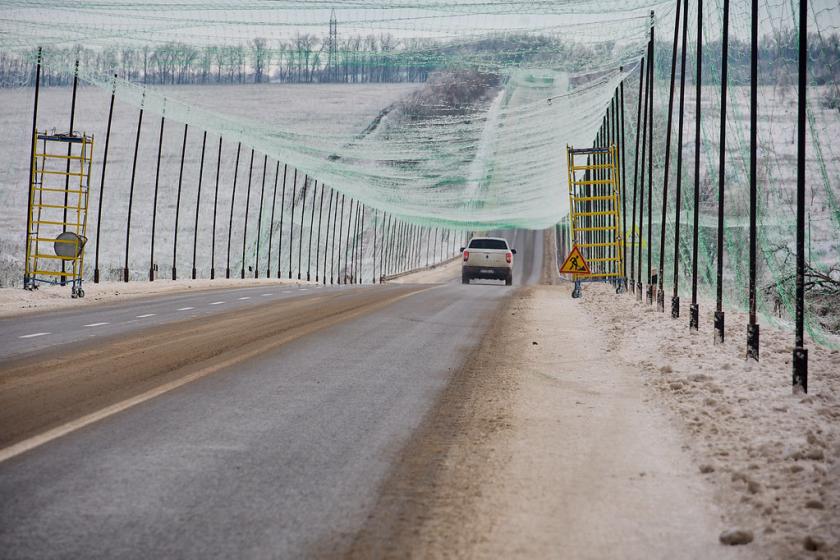
The tunnel network compounds the effect of the real-time satellite ISR advantage already documented. If Ukrainian forces can move supplies under cover while maintaining live targeting feeds for offensive operations, Russian logistics interdiction becomes asymmetrically expensive — each strike requires fresh ISR, while Ukraine's targeting cycle stays compressed.
This tilts the attrition calculus: Russia must either concentrate drones on tunnel chokepoints (reducing strikes on frontline targets) or accept that supply disruption requires sustained presence, not one-off strikes. The scale (822 km) suggests Ukraine is betting on defensive depth rather than speed — a signal that it expects sustained drone pressure through 2027.
This hardens the logistics kill chain that Russian drone strikes have compressed to hours.
Ukraine's real constraint is no longer how fast it can move supplies — it's how fast Russia can retarget them. If 822 km of tunneled road is now operational, Russia's targeting cycle must shift from pre-positioned coordinates to real-time ISR, which buys Ukraine 6-12 hours per strike and forces Moscow to concentrate drone assets on fewer, higher-value nodes.
Watch whether Russian strike frequency on supply nodes drops (indicating retargeting difficulty) or concentrates on tunnel entrances/exits (indicating adaptation).
What percentage of Ukraine's critical supply routes are now tunneled? The 822 km figure is a cumulative total — how much of the active logistics network does it represent?
Fault Lines
Strategic intelligence, synthesized daily — with a public track record. Every call graded against what actually happened.