Kenya Denies 1K+ Citizens Deployed to Russian Forces in Ukraine; Mudavadi Visit Signals Diplomatic Escalation
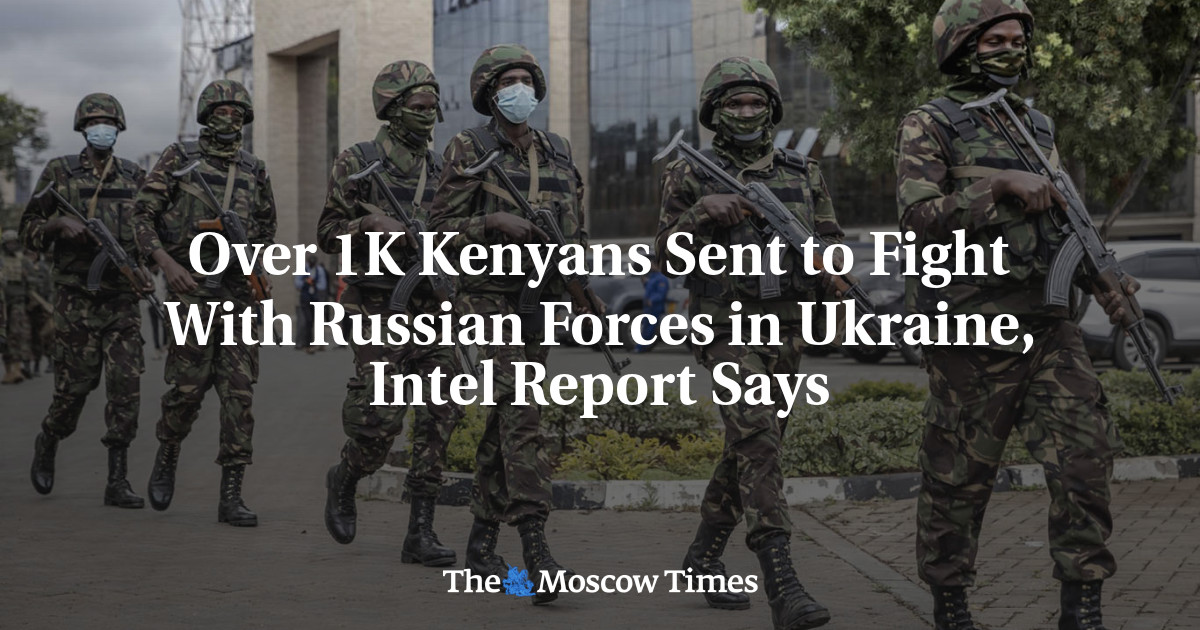
Russian manpower depletion forces Moscow to recruit across Africa and Asia — regions where the U.S. has limited but growing military partnerships. Kenya's public objection to recruitment creates a lever for the U.S. to deepen bilateral defense ties (counterterrorism, maritime security in the Indian Ocean) by positioning itself as the alternative to Russian exploitation.
Conversely, if Kenya's government prioritizes commercial ties to Russia over the Mudavadi complaint, it signals that African nations are decoupling from Western security frameworks faster than current force posture assessments assume.
If confirmed, this represents a significant expansion of third-country personnel in Russian combat operations — a metric that directly tracks Russia's manpower constraints and reliance on foreign recruitment.
For defense planners, the scale (1,000+) and nationality (sub-Saharan Africa) suggest Russia is systematically recruiting across regions with weak labor enforcement and limited diplomatic leverage to object.
This complicates Western intelligence assessments of Russian force sustainability and introduces a new friction point in U.S.-Kenya defense relations: Kenya's government may face pressure to restrict military cooperation with the West if the U.S. is seen as enabling public criticism of Russian recruitment on Kenyan soil.
The Mudavadi visit is a test of whether Kenya will formally demand Russia cease recruitment or simply lodge a diplomatic complaint — the outcome determines whether Kenya remains a reliable partner for U.S. counterterrorism operations in the Horn of Africa.
The article does not specify the source or methodology of the intelligence report (U.S., allied, or Kenyan intelligence?), the timeline of recruitment, whether these personnel were coerced or voluntary, or how many have been killed/wounded.
Fault Lines
Strategic intelligence, synthesized daily — with a public track record. Every call graded against what actually happened.