Army Commits $4B to NGC2 Combat Network; XM30 Modernization Accelerates Amid Hormuz Strain
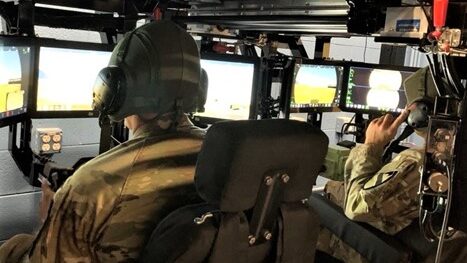
The NGC2 investment directly supports the Navy's blockade enforcement posture that is already active in the Arabian Sea. As Hormuz closure hardens (per April 20 shipping data: 3 crossings in 12 hours), real-time command integration becomes a force-multiplier for the 5th Fleet.
Without NGC2, the Army cannot project air defense or electronic warfare support into the Gulf without pre-positioned units or tactical relay delays—a vulnerability Iran has already probed. Simultaneously, the $4B commitment signals to allies (UK, France convening the 30-nation Hormuz conference on April 22) that the US is institutionalizing the blockade within force structure, not treating it as temporary.
The timing and scale matter more than the announcement itself.
The Army is locking in $4B for NGC2 while the Hormuz blockade has exposed critical gaps in real-time command-and-control across distributed naval and air assets—the exact problem NGC2 is designed to solve. This isn't a coincidence.
The $1.5T defense budget Trump released the day before (April 21) telegraphs that Hormuz enforcement will be sustained, not a brief show of force, which means the Army is hedging against a prolonged logistics competition in the Gulf.
If NGC2 slips past FY28 initial operational capability, the service loses the ability to coordinate multi-domain operations in a contested Hormuz environment—where the Navy is already executing blockade enforcement without real-time Army air defense integration.
The XM30 program itself remains vague in public materials, but the budget commitment suggests the Army is betting on a platform that can operate in an anti-access environment, likely a replacement or successor to the Stryker. Watch whether this $4B gets front-loaded into FY27-FY28 or stretched across the FYDP; front-loading signals the Army expects Hormuz tension to persist.
Does the $4B NGC2 figure include integration costs with Navy and Air Force command systems, or is it Army-only architecture?
Fault Lines
Strategic intelligence, synthesized daily — with a public track record. Every call graded against what actually happened.