NORAD Scrambles 12 Aircraft as Russian Bombers Probe Alaska ADIZ Amid US-Iran War
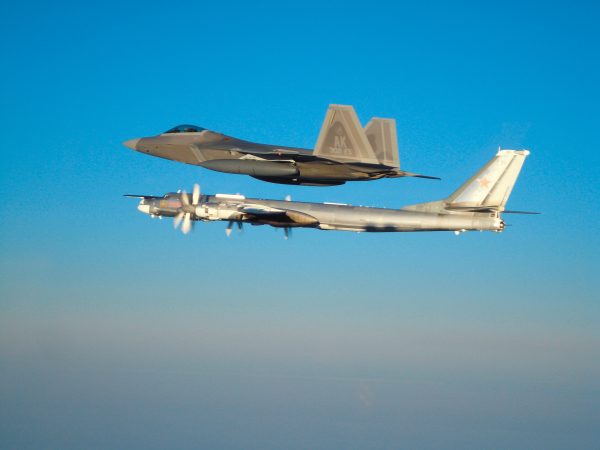
Russian ADIZ probes during active US air operations in the Middle East create a readiness allocation problem for North American Aerospace Defense Command.
If Russia is conducting deliberate probing while US air superiority assets are committed to Iran, Moscow is mapping the window of reduced continental air defense density — a reconnaissance-for-future-leverage tactic that may inform Russian Arctic or North Atlantic operations planning.
This forces NORAD to choose between maintaining continental alert coverage and supporting Pacific Command's potential Taiwan contingency readiness, both of which depend on overlapping F-22/F-35 rotations.
This is a secondary-theater probe, not an isolated incident.
Russia is testing North American air defense responsiveness while the US is committed to a major air campaign 5,000+ miles away. If this represents a pattern — multiple Russian ADIZ incursions during the Iran conflict window — it signals Moscow testing whether US continental defense has degraded due to aircraft diversion to Middle East operations.
The immediate concern: does this force Pacific Air Forces to maintain higher alert posture, competing for F-22/F-35 sortie generation with Middle East tasking? If sustained, it creates a two-front attention problem for NORAD and potentially delays Arctic domain awareness upgrades already constrained by procurement timelines.
The article does not specify (1) whether this was a routine ADIZ probe or elevated in frequency/proximity compared to baseline Russian activity, (2) how many US fighters are currently forward-deployed to Middle East operations, or (3) whether NORAD has adjusted alert posture or rotational schedules...
Fault Lines
Strategic intelligence, synthesized daily — with a public track record. Every call graded against what actually happened.