KF-21 Clears Type Certification; South Korea Advances Indigenous Fighter to Service Entry
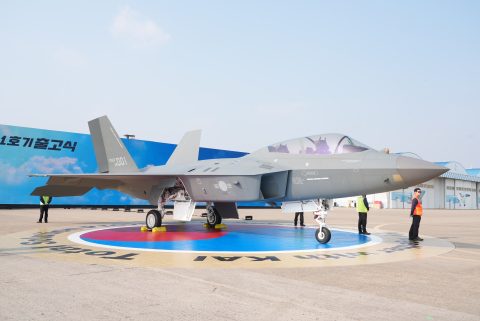
Type certification is a gate, not a finish line. South Korea still faces integration risk on avionics, sensor fusion, and combat systems — areas where the KF-21 has historically lagged. If integration timelines slip by 12-18 months (common in first-generation indigenous programs), Korea's replacement schedule for aging F-4E airframes becomes untenable, forcing continued F-35 procurement to backfill the gap.
That constraint directly affects allied procurement timelines in the region; if Seoul signals urgent F-35 acceleration, it undercuts Seoul's own industrial base narrative and signals lower confidence in KF-21 operational readiness than the certification headline suggests.
South Korea now has a domestically certified fighter platform, reducing dependence on foreign procurement cycles for next-generation air capability — a strategic shift for INDOPACOM's balance against PLA modernization.
The certification removes the technical gate that was blocking production ramp-up; Korea Aerospace can now move from prototype validation to low-rate initial production without waiting for external airworthiness sign-off.
Watch the FY2027 Korean defense budget and any announcement of production contract quantities — the gap between certification and first operational squadron deployment will reveal whether Seoul is serious about replacing F-4E/F-5 airframes or treating KF-21 as a hedge against supply disruption.
What is the planned production rate post-certification, and does it align with Korea's stated requirement for 120 airframes? The article omits any timeline for initial operational capability or production lot sequencing.
Fault Lines
Strategic intelligence, synthesized daily — with a public track record. Every call graded against what actually happened.