Ukraine Air Defense Intercepts 116 of 143 Russian Drones; 27 Penetrate Defenses
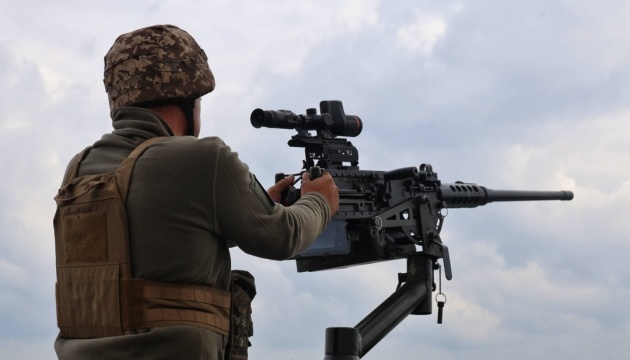
Sustained 19% penetration rates force Ukraine's air defense procurement calculus backward. If this intercept rate holds at scale, Ukraine needs to increase short-range interceptor density faster than current Western production can supply — Army's recent procurement of 13,000 low-cost interceptor drones is now a consumption forecast, not a surplus.
The real constraint is not drones but ammunition production: each Patriot kill costs $4M in rounds; each IRIS-T costs $1.2M. At 27 nightly penetrations, Ukraine burns through roughly $32M in air defense ammunition per night to maintain this intercept rate.
An 81% intercept rate is tactically solid but operationally unsustainable.
At this scale — 143 drones in a single wave — even a 19% leak-through means 27 strikes across Ukrainian infrastructure, air bases, or civilian targets. The math is brutal: if Russia can sustain this tempo, Ukraine loses 27 targets per night. Over 30 days, that's 810 penetrations. Ukraine's air defense inventory is finite.
MANPADS and short-range systems burn through ammunition; longer-range systems like Patriot and IRIS-T have limited magazine depth and are vulnerable to saturation attacks. The source doesn't specify which platforms achieved the 116 kills, so we don't know whether Ukraine is burning through scarce Western air defense rounds or relying on Soviet-era systems with deeper stockpiles.
That distinction determines how long this intercept rate holds. Recent Fault Lines reporting flagged that 20% of Russian Shahed drones now use real-time control, bypassing some EW defenses — this signal doesn't address whether those 27 penetrations included networked variants, which would indicate a structural vulnerability in Ukraine's EW architecture.
Of the 27 drones that penetrated: how many were networked (real-time control) versus pre-programmed? If the leak-through is disproportionately online-controlled Shaheds, Ukraine faces an EW problem, not an air defense problem — and that requires a different fix.
Fault Lines
Strategic intelligence, synthesized daily — with a public track record. Every call graded against what actually happened.