Joint Chiefs Chair Caine Backs Autonomous Weapons for Drones, Command-Control
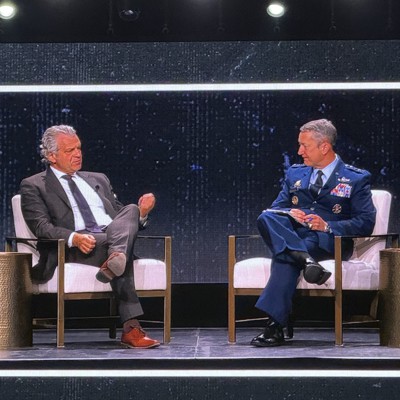
Autonomous command-and-control integration directly supports the Hormuz blockade enforcement and Pacific contingency posture already underway.
Real-time ISR coordination across Navy, Air Force, and allied assets in contested waters requires faster decision loops than human command can sustain — autonomy in comms and targeting coordination becomes a force-multiplier in the high-volume tanker interception operations now active.
If the Pentagon fields autonomous ISR-to-strike coordination before allies do, it also shifts the competitive calculus in Indo-Pacific contingency planning, where the US Navy's speed of response against PLA assets depends on removing human latency from sensor-to-weapon loops.
This is a statement of intent, not a program announcement.
Caine's framing signals the building has moved past the 'whether' question on autonomy and is now in the 'how fast' phase — but without naming specific platforms, budgets, or fielding dates, it's a political signal more than an operational commitment. The timing matters: it lands during the Hormuz blockade, when Navy drone operations and ISR coordination are under real operational stress.
If autonomy targets command-and-control first, that's a different acquisition path than autonomous firing decisions on drones — the former touches comms architecture and AI integration across the fleet, the latter touches rules of engagement and legal liability. Expect pushback from the Hill on both fronts. Congress will demand specifics in the FY27 defense authorization markup.
Did Caine commit to a fielding date or specific platform, or was this a directional statement? And critically: does 'autonomous' mean autonomous targeting, autonomous navigation, or autonomous command relay — the three are different programs with different legal and operational implications.
Fault Lines
Strategic intelligence, synthesized daily — with a public track record. Every call graded against what actually happened.