Dateline Rare Earths Project Expands U.S. Heavy REE Supply, Tests Domestic Extraction Economics
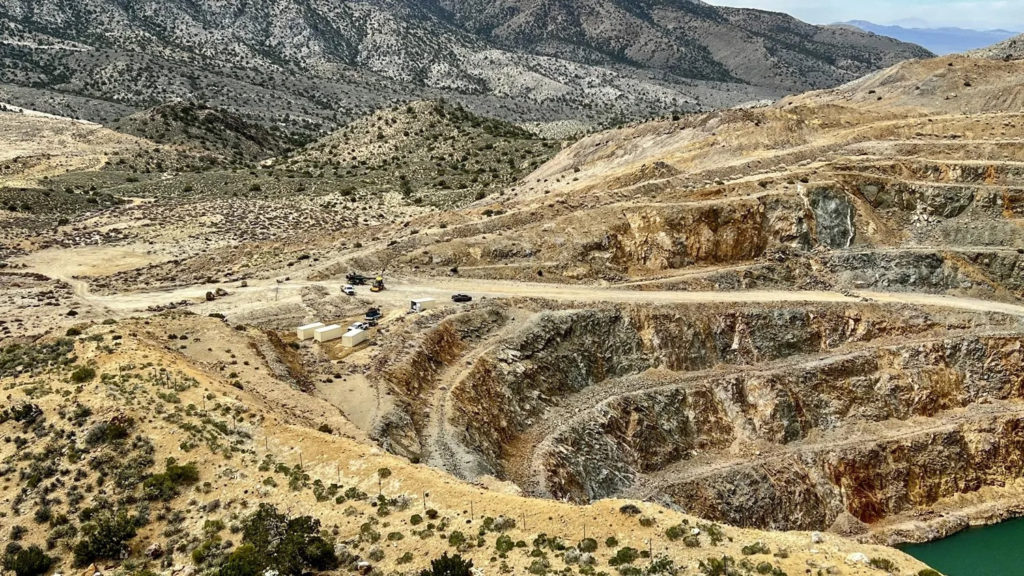
Domestic HREE availability directly constrains the production rate of high-performance permanent magnets used in next-generation radar (AESA), hypersonic guidance systems, and directed-energy platforms.
If Dateline's project reaches 500+ tonnes/year of separated HREEs by 2028-2030, it could enable higher production rates for Raytheon's AIM-120D and Northrop's AGM-88 variants without competing for Chinese or Myanmar feedstock. Conversely, if the project stalls or costs exceed Chinese parity, DoD will continue rationing HREE-intensive components, delaying Block upgrades for F-35 and F/A-18 sensor suites.
Heavy rare earths (dysprosium, terbium, ytterbium) are critical to military-grade permanent magnets in radar, missile guidance, and directed-energy systems.
U.S. domestic HREE supply remains negligible—the 2023 USGS Critical Minerals Assessment identified zero domestic HREE production. If Dateline achieves commercial extraction at scale, it reduces reliance on Myanmar and China for military-spec feedstock, lowering procurement risk for defense contractors (Raytheon, Northrop, Lockheed) dependent on rare-earth magnet suppliers.
However, U.S. rare-earth projects have a history of cost overruns and extended timelines (Molycorp, MP Materials); without disclosed capex, timeline, or grade/tonnage estimates, the project remains speculative. The strategic value depends entirely on whether Dateline can compete with Chinese extraction economics—currently 40-60% lower cost per kilogram of separated HREE.
The article does not state: project capital cost, expected production volume or grade, timeline to first commercial output, processing location (domestic or offshore), or whether Dateline has secured offtake agreements with defense suppliers or DoD.
Fault Lines
Strategic intelligence, synthesized daily — with a public track record. Every call graded against what actually happened.