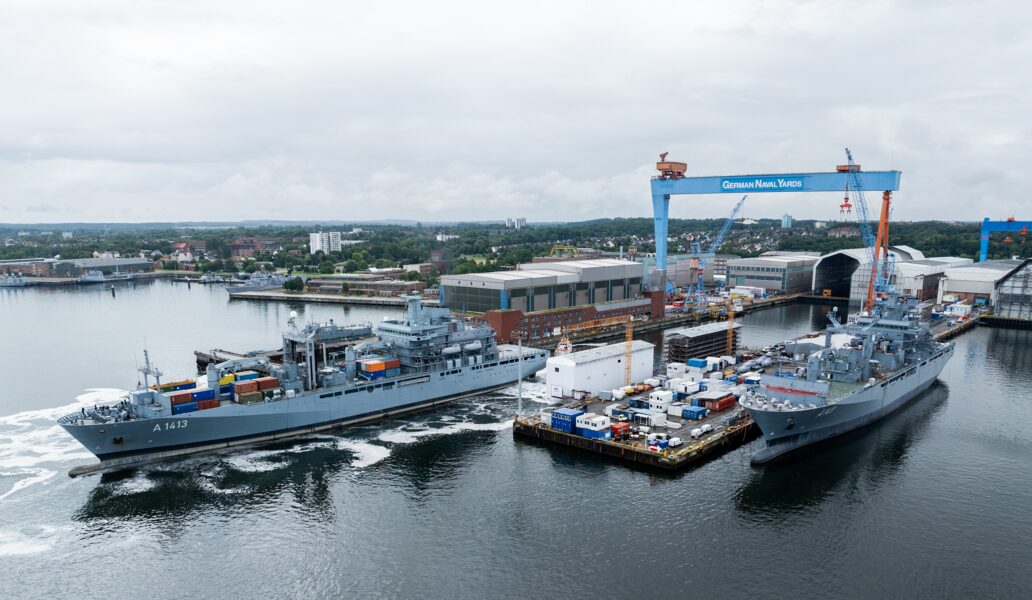
Rheinmetall Submits Non-Binding Offer for German Naval Yards Kiel
Consolidation under a single defense prime reduces the transaction costs of multi-national frigate programs. If Rheinmetall successfully integrates GNYK's workforce (estimated 2,000+ skilled workers) and modernizes the yard's design-build systems, it positions the firm to compete directly with Fincantieri for AUKUS-Australia's Hunter-class frigate sustainment contracts — worth an estimated $8-12B over 15 years.
The risk: if integration drags or German labor costs remain uncompetitive, Rheinmetall absorbs the yard's chronic underutilization, which has plagued GNYK since the 2008 financial crisis. Navantia and Fincantieri are watching to see if this move signals German commitment to co-production or a defensive play to keep the yard from foreign acquisition.
Rheinmetall gains control of Germany's primary naval construction facility at a moment when NATO allies are accelerating frigate and corvette procurement timelines.
GNYK is the production hub for the F125-class frigate and future HNLMS designs; consolidating it under Rheinmetall's ownership removes a fragmented ownership structure that has constrained production scheduling and cost control.
The timing matters: if the acquisition closes before FY27 budget cycles, Rheinmetall can lock in AUKUS-partner contracts (UK, Australia) for frigate co-production, which currently route through separate German state entities.
Watch whether the German government's foreign investment review clears the deal by Q3 2026 — delays past that window push co-production decisions to alternative yards (Italy's Fincantieri, Spain's Navantia).
What is the actual purchase price, and does Rheinmetall plan immediate capacity expansion at GNYK, or is this a consolidation play to rationalize existing capacity?
Fault Lines
Strategic intelligence, synthesized daily — with a public track record. Every call graded against what actually happened.