The Diplomat: South Korea's Industrial Strengths Create Alignment Dilemma Across Multiple International Groupings
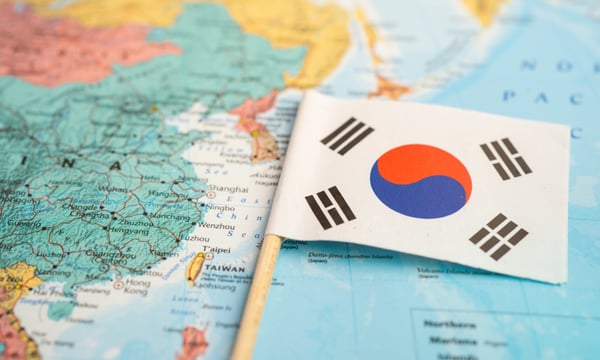
If Seoul moves decisively into the US-led lane — under pressure from the Trump administration's investment pledge demands the article describes — China's documented willingness to apply economic coercion puts Korean battery and semiconductor supply chains at immediate risk, because Chinese raw material inputs have no short-term substitute.
That cost falls on Samsung, SK Hynix, LG Energy Solution, and POSCO before it reaches any government budget line. The middle-power coalition lane avoids the binary but, as Mullett notes, generates its own opportunity costs; the question Korean planners cannot yet answer is whether that lane has enough purchasing power to replace Chinese market access.
South Korea's defense ministry and trade ministry face a sequencing problem with no clean answer: the industrial portfolio that makes Seoul valuable — Samsung and SK Hynix in memory chips, Hanwha and Korea Aerospace Industries in arms exports, HD Hyundai and Hanwha Ocean in shipbuilding — is the same portfolio that Beijing uses as leverage through import dependencies in semiconductors and batteries.
Mullett's framing is that alignment decisions are not reversible on a short timeline, so the window before the next US-China trade confrontation or Taiwan contingency forces Seoul's hand is the operative constraint. The Hormuz disruption already in progress — the strait has been a contested waterway since March 2026 — adds a live stress test to the theoretical tradeoffs Mullett describes.
Does the article or any cited data quantify what share of South Korea's semiconductor and battery raw material imports originate from China specifically, and what the realistic substitution timeline would be under each alignment scenario?
Fault Lines
Strategic intelligence, synthesized daily — with a public track record. Every call graded against what actually happened.