US Munitions Replenishment Delayed to 2030-31; Iran War Depletion Creates 4-Year Capability Gap
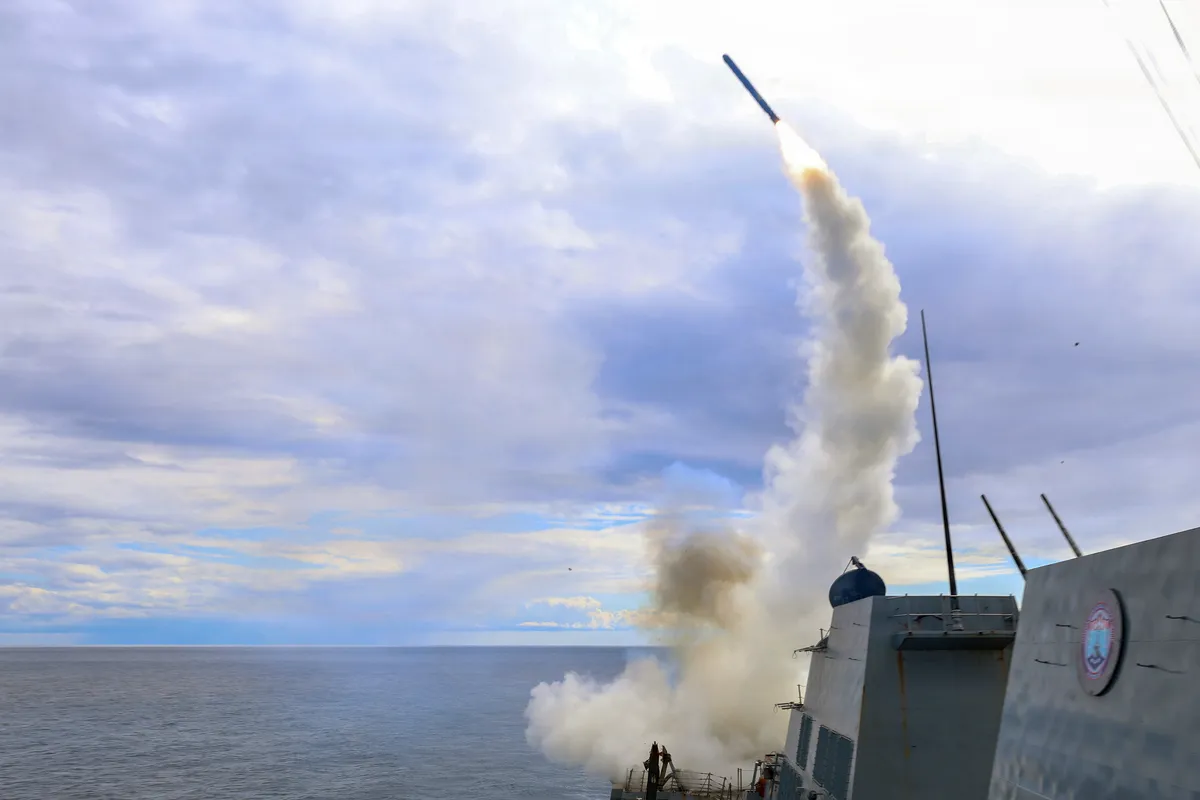
The 2030-31 timeline is a hard constraint on INDOPACOM force posture planning. If the Pacific Fleet cannot assume munitions availability before 2031, then Taiwan contingency exercises must now assume either (a) 60-90 day operational windows before supply exhaustion, or (b) a shift to lower-rate-of-fire doctrines that reduce platform utilization.
Either way, the Navy's carrier strike group tempo planning and the Air Force's sustained combat air patrol assumptions built into the AirSea Battle concept face revision. Raytheon and General Dynamics will lobby for emergency LRIP authorization in the supplemental, but even accelerated production adds only 15-20% to annual output—still insufficient to close a four-year gap while maintaining operational drawdown.
This analysis directly contradicts the Pentagon's FY27 munitions acceleration narrative and forces a hard reckoning with industrial base reality: even with supplemental appropriations, the US cannot simultaneously sustain operations in the Middle East and rebuild strategic reserves for a Taiwan contingency.
The constraint is fabrication capacity, not funding—the Defense Logistics Agency's production contracts with General Dynamics (ammunition), Lockheed Martin (missiles), and Raytheon Technologies (air-defense systems) are already at stated maximum throughput. A 2030-31 replenishment date means the US enters a potential China-Taiwan crisis with degraded munitions depth.
Watch the FY27 supplemental (expected June-July) for whether Congress attempts to break the bottleneck through emergency production lines or dual-sourcing, or accepts the risk.
Does the analysis specify which munitions categories face the longest replenishment timelines—air-to-air missiles, PGMs, air defense rounds, or naval ordnance?
Fault Lines
Strategic intelligence, synthesized daily — with a public track record. Every call graded against what actually happened.