Air Force Doubles EA-37B Fleet Plan to 200+ Aircraft; $3B Five-Year Spend Follows Combat Debut
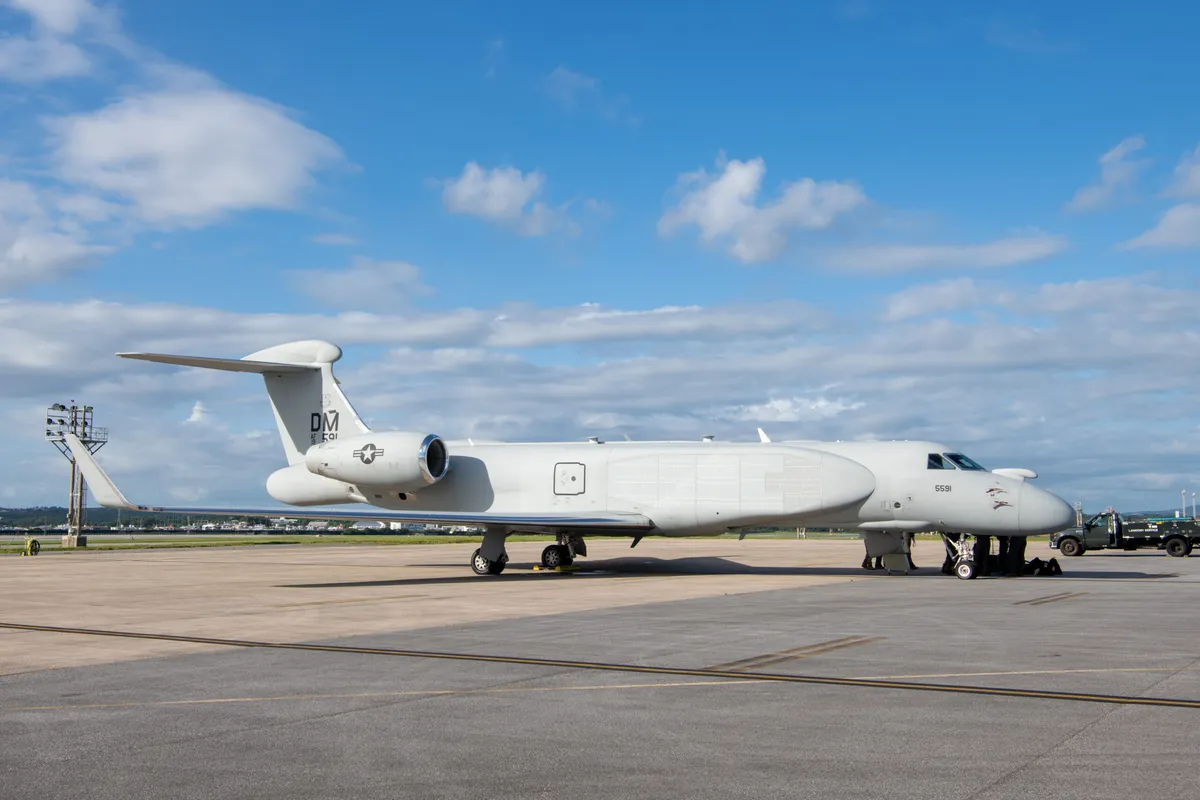
The EA-37B acceleration is a forced move, not a strategic choice. If the platform proved insufficient in combat or unreliable in the Hormuz theater, the Air Force would not be doubling the buy — it would be redesigning or canceling. Instead, the service is signaling confidence to Pacific Command and to Northrop/General Dynamics' investors that the platform works and production will follow.
The second-order effect: this pulls General Dynamics' fabrication capacity away from other electronic warfare platforms (the EA-18G sustainment line, AGM-88E HARM production) and forces a renegotiation of supplier contracts for composite fuselage components. Northrop will face pressure to bid aggressively on the sustainment contract to lock in margin before General Dynamics raises subcontractor costs.
This is a procurement acceleration decision, not a capability revelation — the EA-37B already deployed, so the Air Force is now committing capital to scale production.
The decision triggers three distinct pressures: (1) General Dynamics and Northrop Grumman (the prime contractors on the platform) must ramp Tucson and Palmdale fabrication lines within 24 months to meet the accelerated delivery schedule, or face penalty clauses on Lots 5-8. (2) Pacific Command's electronic warfare posture against China now has a credible platform for the Taiwan Strait contingency window (2027-2029), which shifts the calculus on F-16V sustainment contracts and SEAD mission architecture — INDOPACOM can now retire older EA-18G airframes faster, freeing $400M+ in O&M for munitions stockpile replenishment. (3) Congress must appropriate the $3B over the FYDP; if the markup stalls or gets diverted to crisis response (e.g., Hormuz escort ops), the production ramp collapses and delivery slips to 2029-2030, exposing the Taiwan window.
The timing matters: this announcement comes as Project Freedom is consuming Navy air assets in the Hormuz and the Lebanon ceasefire is fragmenting, so budget hawks will argue the $3B should flow to munitions and carrier ops instead of a new fighter variant.
Does the $3B projection include Lot 5-8 procurement, or only R&D and sustainment? If it's procurement-inclusive, what's the unit cost trajectory — is the Air Force betting on 30% learning curve reductions, or does this assume flat-rate production?
Fault Lines
Strategic intelligence, synthesized daily — with a public track record. Every call graded against what actually happened.