Russia Escalates Drone Strikes on Ukrainian Ports to 800+ in 2026; Tenfold Increase in Four Months
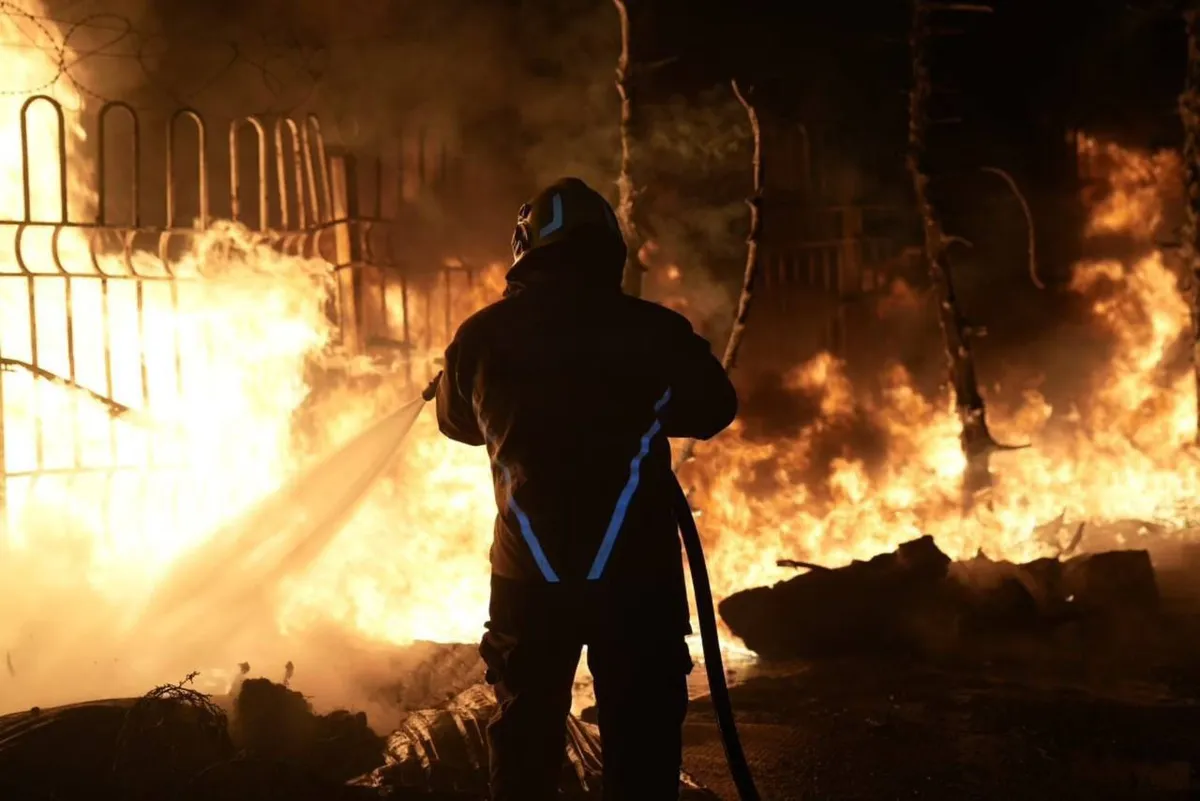
The drone strike acceleration directly compresses Ukraine's maritime export window and forces NATO to expand air defense commitments to Black Sea ports — shifting procurement from offensive systems to layered SHORAD/MANPADS. This also validates Russia's integration of drone swarms into combined-arms doctrine, likely to be replicated against NATO logistics corridors if conflict expands.
Concurrently, the Middle East escalation (Iran blockade, Hormuz closure) is eliminating alternative grain routes and energy markets, leaving Ukraine and Europe dependent on remaining Black Sea access — making port defense a NATO-critical mission, not a Ukrainian one.
This is not a new threat — it's a quantified acceleration of an existing campaign.
Russia has moved from sporadic port strikes to systematic attrition of Ukraine's remaining maritime capacity. The 800-drone figure aligns with Zelensky's May 2 report of 1,600 weekly drones across all targets, meaning ports absorb roughly half of Russia's drone production. Ukraine's ability to export grain, maintain naval operations, or sustain Black Sea commerce is approaching zero.
For Western suppliers, this confirms the drone-as-primary-weapon model is now operational doctrine, not experimental. Raytheon, Northrop, and Anduril should expect accelerated procurement requests for loitering munitions and air defense.
The scale also suggests Russia has solved supply-chain constraints on drone manufacturing — sustained output at this level requires stable component sourcing, likely from Central Asian suppliers and salvaged Western electronics.
Are the 800 drones concentrated on a handful of high-value targets (Odesa, Mykolaiv, Kherson), or distributed across smaller ports? Concentration would suggest precision targeting for maximum economic damage; distribution would indicate saturation attacks to overwhelm air defenses.
Fault Lines
Strategic intelligence, synthesized daily — with a public track record. Every call graded against what actually happened.