India Completes ULPGM-V3 Drone-Launched Missile Trials; Domestic Supply Chain Reduces Munition Dependency
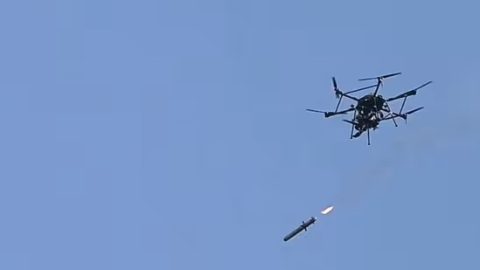
If India scales ULPGM-V3 production to 500+ units annually, it displaces demand for imported Hellfires and JDAM variants that would otherwise flow through US Foreign Military Sales channels. That frees FMS capacity for allied partners (Poland, South Korea, Philippines) competing for the same munition pools.
Conversely, if production stalls below 200 units/year, India remains dependent on Western imports and vulnerable to US export control leverage in a crisis—exactly the constraint that exposed New Delhi during the 2019 Balakot standoff when Pakistan called India's bluff on air superiority.
India's domestic drone-launched missile capability reduces New Delhi's reliance on Western munition imports at a moment when allied supply chains are strained by concurrent demands from Ukraine, Taiwan contingency planning, and regional deterrence.
The ULPGM-V3 signals India is moving beyond platform procurement toward indigenous munitions integration—a shift that will reshape how INDOPACOM factors Indian naval and air force strike availability into contingency planning for the Taiwan Strait and Indian Ocean.
Watch whether India accelerates production timelines or offers ULPGM-V3 variants to Quad partners (Japan, Australia) as an alternative to Western precision munitions.
What is the ULPGM-V3's range, warhead mass, and guidance system (INS/GPS/datalink)? Does it integrate with India's existing drone platforms (Rustom, Tapas) or require new airframes?
Fault Lines
Strategic intelligence, synthesized daily — with a public track record. Every call graded against what actually happened.