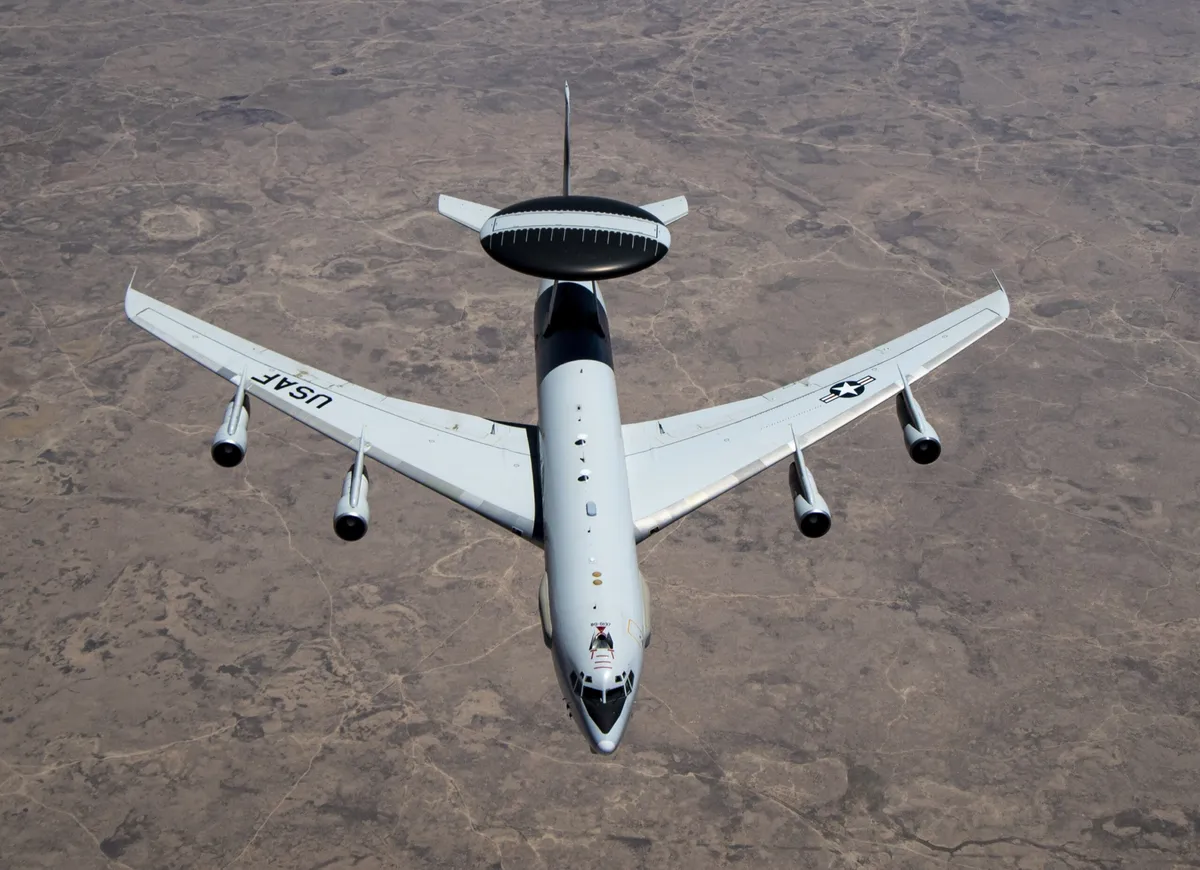
E-3 AWACS Damaged in Prince Sultan Strike; Command-Control Capability Degraded
The E-3 degradation forces Air Force to shift ISR burden onto satellite-based IMINT and signals intelligence, which lack real-time battle management bandwidth and are subject to orbital revisit delays.
This creates a 12-48 hour gap in dynamic air tasking order execution, pushing tactical coordination down to lower-echelon platforms (AWACS from other bases, carrier-based E-2D Hawkeyes) and degrading response time to new Iranian or proxy threats.
If the aircraft is out of service beyond 30 days, CENTCOM will face pressure to surge additional E-3s from other commands (Pacific or European), creating a ripple effect in those theaters' readiness posture.
The E-3 AWACS is the primary airborne early warning and command node for US Central Command air operations across the Middle East.
Loss of even one airframe from the fleet (estimated 31 active E-3s across all commands) reduces real-time ISR and battle management capacity during active conflict. If the aircraft requires depot-level repair, it removes capability from theater for weeks to months, forcing reliance on ground-based radar and reducing coordination bandwidth for multi-front operations (Israel, Saudi Arabia, Gulf partners).
The damage also confirms Iran's targeting precision — the E-3 is a high-value, hardened asset, suggesting either pre-strike intelligence or successful penetration of base air defense. Repair costs and timeline will surface in Air Force sustainment requests; watch for supplemental funding or cannibalization of other aircraft.
The article does not specify: (1) extent of damage (repairable in-theater vs. requires depot overhaul), (2) estimated return-to-service timeline, (3) whether the aircraft was operational at time of strike, (4) total number of E-3s currently forward-deployed in CENTCOM AOR, or (5) whether this affect...
Fault Lines
Strategic intelligence, synthesized daily — with a public track record. Every call graded against what actually happened.